
As an Amazon Associate, I earn from qualifying purchases.
If your “weight-loss lunch” leaves you searching for snacks at 3 p.m., the problem may be the lunch—not your willpower.
A more satisfying lunch usually combines a meaningful protein source with fiber-rich foods such as beans, lentils, whole grains, vegetables, or fruit. These high protein high fiber lunches for weight loss use that simple idea to create practical meals for work, home, meal prep, and busy weekdays.
You will find quick no-cook options, vegetarian choices, freezer-friendly meals, and portable lunches below. More importantly, you will also get a repeatable formula so you can build your own combinations.
Protein and fiber can support a filling eating pattern. However, no individual food or lunch guarantees weight loss. Your overall food intake, activity, health, and long-term habits still matter. NIDDK recommends sustainable healthy eating and physical activity as part of long-term weight management.
Quick Answer: What Should a High-Protein, High-Fiber Lunch Include?
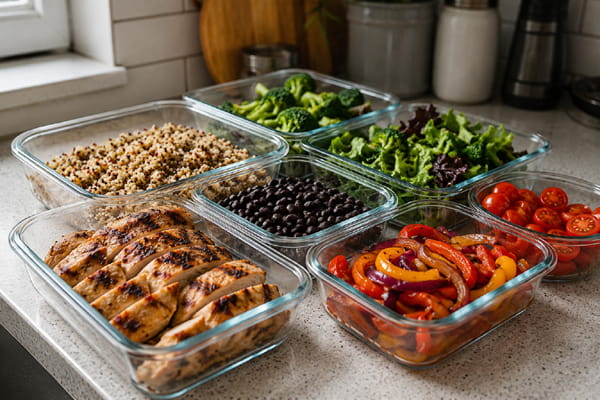
A practical lunch can start with a substantial protein source. Next, add beans, lentils, whole grains, vegetables, fruit, or another fiber-rich food. Then add flavor without letting sauces and toppings overwhelm the meal.
The FDA lists 28 grams of dietary fiber as the Daily Value. It also uses 20% Daily Value or more as a general benchmark for a high amount of a nutrient on packaged-food labels.
You do not need to hit your entire daily fiber goal at lunch. Instead, spread fiber-rich foods throughout your day and adjust portions to your individual needs.
How We Chose These Lunches
This guide does not claim that Sweet-crush personally tested every meal or performed laboratory nutrition analysis.
Instead, each lunch was selected using four practical criteria. It needs a clear protein anchor, at least one meaningful fiber source, ingredients available in mainstream US grocery stores, and a format that works for real weekday lunches.
Exact calories, protein, fiber, and sodium will vary by brands and portions. Therefore, check labels when those numbers matter to you.
This transparent approach keeps the guide useful without pretending that every homemade bowl has one universal nutrition profile.
Pick Your Lunch in 20 Seconds
| If You Need… | Start With |
|---|---|
| Best meal-prep option | Chicken, quinoa, and black bean bowl |
| Fastest no-cook lunch | Tuna and white bean salad |
| Best portable work lunch | Turkey hummus crunch wrap |
| Plant-based choice | Tofu, edamame, and broccoli soba bowl |
| Budget-friendly batch meal | Turkey and bean chili |
| Freezer-friendly lunch | Chicken and white bean vegetable soup |
| Cold vegetarian lunch | Lentil quinoa feta salad |
How to Build High Protein High Fiber Lunches for Weight Loss
Think in four parts.
First, choose your protein anchor. Chicken, fish, turkey, eggs, Greek yogurt, cottage cheese, tofu, tempeh, edamame, beans, and lentils all work.
Next, add a strong fiber component. Beans and lentils are especially convenient because they can contribute both protein and fiber. Whole grains, sweet potatoes, vegetables, berries, seeds, and fruit add more variety.
Then add plenty of vegetables when they fit the meal. They increase volume, texture, color, and variety.
Finally, choose your flavor. Salsa, mustard, herbs, lemon, Greek-yogurt dressing, tahini, avocado, or vinaigrette can make a simple lunch enjoyable.
However, portions still matter. Oils, cheese, nuts, avocado, and creamy dressings can fit a balanced diet, but they also make a meal more energy-dense.
15 High-Protein, High-Fiber Lunches for Weight Loss
1. Chicken, Quinoa, and Black Bean Bowl
Start with about 4 ounces of cooked chicken. Add roughly 1/2 cup each of cooked quinoa and black beans. Then pile on romaine, tomatoes, peppers, and salsa.
Finish with lime and a spoonful of plain Greek yogurt. This bowl works especially well for Sunday meal prep because the main ingredients store separately.
2. Turkey Hummus Crunch Wrap
Spread hummus over a whole-wheat tortilla. Add sliced turkey, cabbage, spinach, cucumber, and tomato.
For extra crunch, add shredded carrots or bell pepper. Pair it with berries or an apple if you want more produce. Compare deli-turkey labels when sodium is a concern.
3. Tuna and White Bean Mediterranean Salad
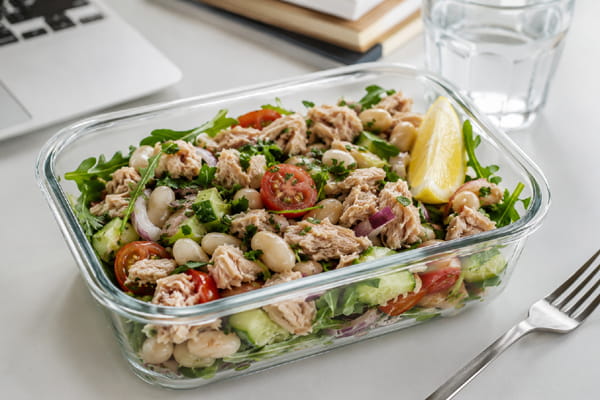
Combine drained tuna with about 1/2 cup of cannellini beans. Add cucumber, cherry tomatoes, parsley, red onion, and leafy greens.
Dress the salad with lemon, black pepper, and a modest amount of olive oil. Because it requires almost no cooking, this is one of the easiest lunches on the list.
4. Salmon and Lentil Greens Bowl
Place cooked lentils over a generous bed of greens. Add approximately 4 ounces of cooked salmon plus cucumber, carrots, and tomatoes.
A lemon-mustard dressing keeps the flavor bright. Leftover salmon works well, while canned salmon can make preparation even faster.
5. Shrimp, Edamame, and Brown Rice Bowl
Pair cooked shrimp with shelled edamame and a moderate serving of brown rice. Next, add broccoli slaw, cabbage, carrots, or sliced peppers.
Finish with lime, ginger, cilantro, and a light soy-based dressing. You can serve this bowl warm or cold.
6. Greek Yogurt Chicken Salad Pita
Mix chopped cooked chicken with plain Greek yogurt, celery, grapes, mustard, and black pepper.
Stuff the mixture into a whole-wheat pita with spinach and shredded carrots. Unlike a traditional heavy chicken salad, this version gets creaminess from Greek yogurt while adding more vegetables.
7. Cottage Cheese, Egg, and Veggie Lunch Box
Pack cottage cheese with a hard-boiled egg, raw vegetables, berries, and whole-grain crackers.
This format works well when you prefer several small components instead of one large dish. In addition, it takes very little time to assemble once the egg is cooked.
8. Turkey and Bean Chili
Cook lean ground turkey with kidney beans or black beans, tomatoes, peppers, onion, garlic, and your preferred chili spices.
Make several portions at once and freeze extras. Instead of loading the bowl with cheese and sour cream, try cilantro, scallions, salsa, or a small spoonful of Greek yogurt.
9. Tofu, Edamame, and Broccoli Soba Bowl
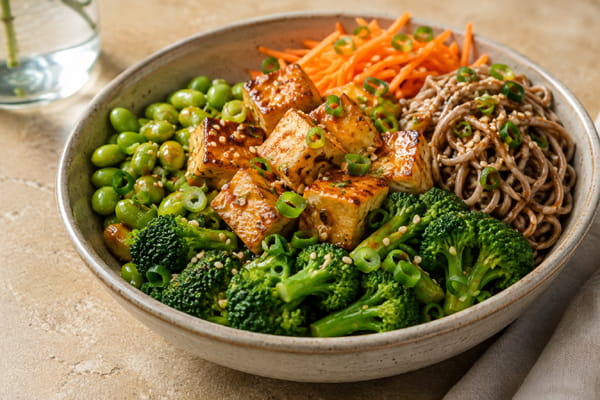
Combine baked or pan-seared tofu with edamame, broccoli, carrots, and a moderate amount of buckwheat soba noodles.
Then add rice vinegar, ginger, scallions, and a light sesame-soy dressing. This option gives plant-forward eaters a substantial lunch without relying on protein powders or bars.
10. Tempeh, Chickpea, and Kale Bowl
Use cooked tempeh as the main protein. Add chickpeas, chopped kale, cucumber, peppers, and tomatoes.
A lemon-tahini sauce pairs well with the earthy ingredients. However, tahini is concentrated, so thin a smaller amount with lemon juice and water rather than pouring it on heavily.
11. Lentil Quinoa Feta Salad
Mix cooked lentils and quinoa with cucumber, tomatoes, parsley, spinach, and a modest amount of feta.
Add lemon juice, herbs, and a little olive oil. Because this salad tastes good cold, it works especially well for office lunches and make-ahead meal prep.
12. Black Bean Sweet Potato Taco Bowl
Combine roasted sweet potato with black beans, lettuce, cabbage, pico de gallo, and sliced peppers.
For a larger protein component, add plain Greek yogurt, chicken, tofu, or extra beans. Keep tortilla chips optional rather than making them the base of the meal.
13. Cottage Cheese Chickpea Veggie Plate
Add cottage cheese and seasoned chickpeas to a divided lunch container. Fill the remaining sections with cucumber, tomatoes, carrots, peppers, and whole-grain crispbread.
Use lemon, herbs, or pepper for extra flavor. This meatless lunch requires almost no cooking and packs easily.
14. Rotisserie Chicken Farro Jar Salad
Layer vinaigrette at the bottom of a jar. Next, add firm vegetables, cooked farro, beans, shredded rotisserie chicken, and leafy greens.
Keep the greens on top so they stay crisp. When you are ready to eat, shake the jar and transfer everything to a bowl.
15. Chicken and White Bean Vegetable Soup
Combine shredded chicken, white beans, tomatoes, carrots, celery, spinach, herbs, and broth.
Make a large pot and freeze individual servings. When buying broth or other prepared ingredients, compare Nutrition Facts labels because sodium varies considerably among products.
Why Protein Deserves a Place in a Weight-Loss Lunch
Weight loss can involve loss of both fat and lean tissue. Therefore, maintaining adequate protein intake can be important.
A 2024 systematic review and meta-analysis of randomized trials found that higher protein intake helped adults with overweight or obesity retain more muscle mass during weight loss. However, the researchers did not find the same clear benefit for strength or physical function.
That evidence does not mean “more protein is always better.” Individual requirements vary. People with certain medical conditions may also need personalized recommendations.
Make These Lunches Easier to Meal Prep
Do not try to cook 15 different meals every week.
Instead, prepare two protein choices, one grain or legume, several vegetables, and one or two sauces. Then remix those ingredients during the week.
For example, Sunday chicken can become Monday’s quinoa bowl, Tuesday’s pita, and Wednesday’s jar salad. That approach reduces preparation without forcing you to eat the same lunch every day.
For packed lunches, food safety matters. USDA recommends keeping perishable foods cold and using at least two cold sources when refrigeration is unavailable. Perishable foods generally should not sit at room temperature beyond two hours, or one hour above 90°F.
Common Mistakes That Make a “Healthy” Lunch Less Useful
The first mistake is building a tiny lunch because you assume weight loss requires eating as little as possible. A lunch that leaves you extremely hungry may be difficult to sustain.
Another mistake is focusing only on protein. Chicken, eggs, or tuna can anchor the meal, but vegetables, legumes, fruit, and whole grains add fiber and variety.
Also watch concentrated extras. Large portions of dressing, cheese, nuts, avocado, tahini, or oil can change a meal quickly.
Finally, do not assume every packaged “high-protein” product is automatically the best choice. Compare the complete Nutrition Facts label and ingredient list.
Who Should Get Personalized Nutrition Advice?
This article provides general educational information. It is not individualized medical nutrition therapy.
Consider professional guidance if you have chronic kidney disease, diabetes requiring medication adjustments, significant digestive disease, pregnancy-related nutrition concerns, an eating disorder, or another condition that changes your dietary needs.
A registered dietitian or qualified health professional can tailor protein, fiber, calories, and meal timing to your circumstances.
Frequently Asked Questions
What is the easiest high-protein, high-fiber lunch?
A tuna and white bean salad is one of the simplest. Combine canned tuna, white beans, vegetables, lemon, and a small amount of olive oil. It requires little preparation and uses common supermarket ingredients.
How much fiber should I eat?
The FDA lists 28 grams as the Daily Value for dietary fiber on Nutrition Facts labels. Individual needs can differ, so treat that figure as a labeling reference rather than a personalized prescription.
Are these lunches automatically low calorie?
No. A meal can contain nutritious ingredients and still be energy-dense. Portions of oil, cheese, nuts, seeds, avocado, sauces, and grains can significantly affect the final meal.
What are the best no-cook options?
Tuna and white bean salad, turkey hummus wraps, cottage cheese chickpea plates, and prepared egg lunch boxes require little or no cooking.
Can vegetarians make high-protein, high-fiber lunches?
Yes. Lentils, beans, chickpeas, tofu, tempeh, edamame, Greek yogurt, cottage cheese, and eggs can form the protein base. Add vegetables and whole grains for more fiber and variety.
Can I meal-prep these lunches for work?
Yes. Bowls, chili, soup, grain salads, and jar salads work especially well. However, keep perishable ingredients refrigerated or properly chilled during transport.
Do protein and fiber guarantee weight loss?
No. They can be useful parts of a satisfying eating pattern, but long-term weight management depends on the overall pattern you can maintain. Diet, activity, health, medications, sleep, and other factors can all matter.
The Bottom Line
The most useful high protein high fiber lunches for weight loss are not complicated “diet foods.” They are meals you can build repeatedly from protein, fiber-rich plants, vegetables, and sensible portions.
Start with two or three ideas that fit your schedule. Then rotate ingredients instead of chasing a perfect meal.
A lunch that is satisfying, practical, and easy to repeat has a much better chance of becoming part of a sustainable routine.
As an Amazon Associate, I earn from qualifying purchases.