
As an Amazon Associate, I earn from qualifying purchases.
Choosing the best sous vide immersion circulator for beginners can feel overwhelming when every model promises precision, convenience, and restaurant-quality results. Fortunately, getting started with sous vide cooking does not require expensive professional equipment or advanced culinary skills.
A beginner-friendly immersion circulator should offer easy temperature adjustments, dependable water circulation, and controls that make everyday cooking simple. Whether you want to cook juicy steaks, tender chicken, or perfectly prepared vegetables, the right machine can help you achieve more consistent results.

Our top recommendation is the Anova Precision Cooker 3.0 because it combines straightforward touchscreen controls, a powerful heating element, and optional Wi-Fi connectivity. The INKBIRD ISV-100W offers a practical alternative for budget-conscious buyers, while the Breville Joule Turbo is particularly appealing to people who enjoy smartphone-guided cooking.
In this buying guide, we compare four beginner-friendly models, explain what features matter most, and show you how to choose your first sous vide cooker with confidence.
Quick Answer: What Is the Best Sous Vide Immersion Circulator for Beginners?
The Anova Precision Cooker 3.0 is our best overall choice for beginners because it offers manual touchscreen controls, 1,100 watts of heating power, and convenient Wi-Fi functionality.
However, different machines suit different cooking preferences.
- Best Overall: Anova Precision Cooker 3.0
- Best Budget-Friendly Alternative: INKBIRD ISV-100W
- Best for App-Guided Cooking: Breville Joule Turbo
- Best Compact Alternative: Anova Precision Cooker Nano 3.0
These recommendations are based on published manufacturer specifications, usability features, and suitability for beginners rather than independent hands-on product testing.
Best Sous Vide Immersion Circulators for Beginners: Quick Comparison
| Sous Vide Cooker | Heating Power | Controls | Best For |
|---|---|---|---|
| Anova Precision Cooker 3.0 | 1,100W | Touchscreen and Wi-Fi | Most beginners |
| INKBIRD ISV-100W | 1,000W | LCD controls and Wi-Fi | Budget-conscious buyers |
| Breville Joule Turbo | 1,100W | Smartphone app | Guided cooking |
| Anova Precision Cooker Nano 3.0 | Check current specifications | On-device controls and Wi-Fi | Small kitchens |
Product specifications, availability, pricing, and connected features may change. Check the manufacturer’s current US listing before making a purchase.
1. Anova Precision Cooker 3.0 — Best Overall for Beginners
The Anova Precision Cooker 3.0 is an excellent choice for anyone who wants to learn sous vide cooking without depending entirely on a smartphone.
Its touchscreen displays cooking time and water temperature, allowing users to adjust settings directly on the device. This is particularly helpful when you want to start cooking quickly without opening an app.
The 1,100-watt heating element makes the cooker suitable for typical household water baths. Its adjustable clamp also helps secure the circulator to compatible cooking containers.
Anova includes Wi-Fi connectivity for users who prefer connected features. However, basic on-device operation provides flexibility for beginners who want a simpler experience.
Key Features
- 1,100-watt heating element
- Two-line touchscreen display
- Wi-Fi connectivity
- Adjustable and detachable clamp
- Removable lower skirt for cleaning
- Manufacturer’s two-year warranty
Pros
The biggest advantage is usability. Clear manual controls allow beginners to learn temperature-based cooking without navigating complicated menus.
The heating capacity is practical for everyday meal preparation, while the removable components make routine maintenance more convenient.
Cons
The full-size design requires more storage space than compact alternatives.
Users interested in connected cooking should also investigate Anova’s current app features and subscription terms before purchasing.
Best For: Beginners seeking an easy-to-operate immersion circulator that can remain useful as their cooking skills improve.
2. INKBIRD ISV-100W — Best Budget-Friendly Alternative
The INKBIRD ISV-100W is worth considering if you want to explore sous vide cooking without immediately investing in a premium appliance.
It features a 1,000-watt heating element, an LCD control interface, and Wi-Fi functionality for monitoring cooking settings through a compatible smartphone.
According to INKBIRD, the cooker supports a water capacity of up to approximately 15 liters, or 4 US gallons.
It also includes a low-water alert, which can provide helpful warning during longer cooking sessions.
Key Features
- 1,000-watt heating element
- LCD touch-button controls
- Wi-Fi connectivity
- Low-water protection
- Support for approximately 15-liter water baths
- Adjustable temperature and timer settings
Pros
The INKBIRD provides useful cooking functionality without requiring beginners to purchase a higher-priced model.
On-device controls are particularly valuable for users who want to operate the cooker manually.
Wi-Fi monitoring adds flexibility when checking cooking progress from a compatible smartphone.
Cons
The design is relatively bulky compared with some compact alternatives.
Its Wi-Fi functionality also requires a compatible network, so buyers should review the connectivity requirements.
Best For: Home cooks looking for a practical balance between affordability, manual controls, and connected features.
3. Breville Joule Turbo — Best for App-Guided Cooking
The Breville Joule Turbo offers a different experience from traditional immersion circulators.
Instead of relying on a prominent on-device control panel, it emphasizes smartphone-based operation through the Breville+ app.
The app provides guided cooking instructions, making this model appealing to beginners who prefer following visual recipes.
Breville also offers Turbo functionality for supported recipes, which can reduce cooking time under specific conditions.
The compact design makes the Joule Turbo convenient for households where kitchen storage space is limited.
Key Features
- 1,100-watt heating element
- Smartphone-based cooking controls
- Breville+ guided cooking experience
- Wi-Fi and Bluetooth connectivity
- Compact construction
- Turbo cooking functionality for supported recipes
Pros
The guided cooking experience can make unfamiliar techniques feel more approachable.
Its relatively compact body is also convenient for small kitchens.
For users comfortable with connected appliances, the app-based interface may simplify recipe selection.
Cons
Smartphone dependence is the most important limitation.
If you prefer adjusting temperature and time directly on the appliance, another model may be more suitable.
Additionally, Turbo cooking does not apply to every food or recipe.
Best For: Beginners who prefer guided recipes, smartphone connectivity, and compact kitchen equipment.
4. Anova Precision Cooker Nano 3.0 — Best Compact Alternative
The Anova Precision Cooker Nano 3.0 is designed for home cooks who prefer smaller kitchen appliances.
Its compact construction can make storage easier in apartments, shared kitchens, and homes with limited counter space.
The Nano 3.0 also provides on-device controls and connected functionality, giving beginners flexibility when choosing how to operate it.
Although compact circulators can be highly practical, smaller appliances may take longer to heat larger water baths.
Before purchasing, confirm current US availability because the Nano 3.0 has previously been listed as sold out.
Pros
- Compact and convenient to store
- Suitable for everyday household portions
- On-device temperature controls
- Optional connected functionality
Cons
Availability may be limited, and compact models may not be the fastest option for heating large containers.
Best For: Apartment residents, occasional cooks, and beginners who prioritize compact kitchen equipment.
How to Choose the Best Sous Vide Immersion Circulator for Beginners
Selecting a sous vide cooker becomes easier when you understand which features affect everyday cooking.
1. Prioritize Simple Temperature Controls
The first feature to consider is how easily you can adjust cooking settings.
For beginners, a clear display with accessible temperature and timer controls can be more useful than an extensive collection of advanced features.
Manual controls also allow you to operate the machine without depending on an internet connection.
App-based devices can be convenient, but they are not necessary for successful sous vide cooking.
2. Consider Heating Power
Most beginner-friendly immersion circulators offer sufficient power for common household cooking tasks.
Models with approximately 1,000 to 1,100 watts can provide practical heating performance for ordinary water baths.
However, wattage does not tell the whole story.
Heating time also depends on the amount of water, starting temperature, insulation, and cooking container.
A more powerful machine is not automatically the best choice for every household.
3. Look for Consistent Temperature Control
Sous vide cooking depends on maintaining a controlled water temperature.
A circulator continuously moves heated water around sealed food, helping distribute heat throughout the container.
When comparing products, review published temperature-control specifications and manufacturer operating instructions.
Remember that accurate water temperature does not automatically guarantee food safety. Cooking time and food thickness remain important.
4. Check Container Compatibility
Not every circulator attaches securely to every pot.
Before purchasing, verify the clamp design, recommended water depth, and minimum and maximum water levels.
An appropriately sized container makes the cooking process easier and helps maintain proper circulation.
5. Decide Whether You Need Wi-Fi
Wi-Fi connectivity can be convenient, especially when checking cooking progress from another room.
However, it is not essential for sous vide cooking.
If you want a straightforward experience, prioritize reliable manual operation.
Also check whether connected features require registration, software updates, or paid subscriptions.
6. Consider Cleaning and Storage
Sous vide cookers regularly contact heated water, which can leave mineral deposits over time.
Models with accessible removable components may be easier to clean.
If your kitchen has limited storage space, consider the appliance’s dimensions before ordering.
What Equipment Do Beginners Need for Sous Vide Cooking?
One advantage of sous vide cooking is that you can start with relatively little equipment.
A basic beginner setup typically includes:
- Immersion circulator: Heats and circulates water.
- Cooking container: Holds the water bath.
- Food-safe bags: Keep ingredients separated from the water.
- Food thermometer: Helps verify safe cooking conditions.
- Kitchen tongs: Make handling hot food easier.
- Skillet: Useful for browning meat after sous vide cooking.
A vacuum sealer is helpful but not always necessary.
For appropriate foods and recipes, you may use the water-displacement method with suitable food-safe bags.
Always verify that your bags are appropriate for the cooking temperature and duration.
How to Use a Sous Vide Immersion Circulator for the First Time

Getting started is straightforward when you follow a reliable recipe and the manufacturer’s instructions.
Step 1: Prepare Your Water Bath
Choose a heat-safe container compatible with your immersion circulator.
Fill it with enough water to stay within the machine’s minimum and maximum markings.
Secure the circulator using its clamp or mounting system.
Step 2: Prepare the Ingredients
Season your food according to your recipe.
Place the ingredients inside an appropriate food-safe bag and remove excess air.
Seal the bag securely to prevent water from entering.
Step 3: Set the Temperature and Time
Choose a reliable sous vide recipe that specifies cooking temperature and duration.
For safe cooking, consider the food’s thickness, starting temperature, and applicable food-safety guidance.
Allow the water bath to reach the recommended temperature.
Step 4: Place the Food in the Water
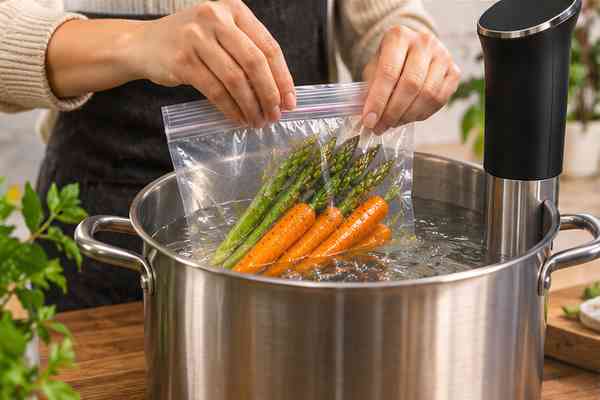
Lower the sealed bag into the water bath.
Make sure the food remains properly submerged and does not obstruct the circulator.
Avoid overcrowding the container because water must flow around the food.
Step 5: Finish and Serve
When cooking is complete, carefully remove the bag.
Some foods can be served immediately, while meats such as steak often benefit from a brief finishing sear.
Dry the meat’s surface before placing it in a hot skillet to encourage browning.
Follow appropriate food-handling and storage practices throughout the process.
Sous Vide Food Safety: Important Beginner Guidelines
Sous vide cooking offers precise temperature control, but food safety still requires attention.
According to the USDA, recommended minimum internal temperatures include:
| Food | USDA Minimum Internal Temperature |
|---|---|
| Whole cuts of beef, pork, lamb, and veal | 145°F with a 3-minute rest |
| Ground meat | 160°F |
| Poultry | 165°F |
Specialized sous vide cooking procedures may use validated combinations of temperature and time, but beginners should not improvise these methods.
Food thickness, heating duration, and storage conditions can affect safety.
Keep raw ingredients refrigerated before preparation. Avoid cross-contamination, and refrigerate leftovers promptly.
For official guidance, consult the USDA food-safety recommendations available through FoodSafety.gov.
Common Sous Vide Mistakes Beginners Should Avoid
Using Too Little Water
Long cooking sessions can cause water to evaporate.
If the level falls below the minimum marking, the circulator may stop operating.
Use sufficient water and follow the manufacturer’s guidance for covering the container.
Overcrowding the Water Bath
Packed bags can interfere with water circulation.
Leave enough space for heated water to move around the food.
Ignoring Cooking Time
Temperature alone does not determine when food is properly cooked.
Different ingredients and thicknesses require different heating durations.
Use established recipes rather than guessing.
Forgetting to Dry Meat Before Searing
A wet surface makes browning more difficult.
After removing meat from its bag, pat it dry before searing if the recipe recommends this finishing step.
Buying Unnecessary Features
An expensive appliance with advanced connectivity may be unnecessary for occasional cooking.
Choose features that match your actual habits instead of paying for functions you may never use.
Is Sous Vide Cooking Worth It for Beginners?
Sous vide cooking can be worthwhile for beginners who appreciate temperature control and repeatable cooking procedures.
It can be especially useful for preparing certain meats, cooking multiple portions, and experimenting with precision cooking techniques.
Compared with conventional cooking, sous vide offers a different level of control over the surrounding cooking temperature.
However, it also has limitations.
Preparing the water bath takes time, food requires appropriate packaging, and some recipes need additional finishing steps.
Sous vide should therefore be considered a useful addition to your kitchen rather than a complete replacement for traditional cooking methods.
Frequently Asked Questions
What is the easiest sous vide immersion circulator for beginners?
The Anova Precision Cooker 3.0 is a strong beginner option because it combines straightforward touchscreen controls with optional Wi-Fi connectivity.
Do beginners need an expensive sous vide machine?
No. An affordable immersion circulator can be suitable if it maintains the required temperature, fits your cooking container, and offers convenient controls.
Can you use sous vide without a vacuum sealer?
Yes. Some recipes allow suitable food-safe bags and the water-displacement method. Follow the bag manufacturer’s instructions.
Is Wi-Fi necessary for sous vide cooking?
No. A sous vide cooker with reliable manual controls can handle many recipes without Wi-Fi connectivity.
Can you leave an immersion circulator unattended?
Follow the manufacturer’s operating and safety instructions. Maintain adequate water levels, secure the appliance, and avoid unnecessary electrical or cooking hazards.
What size pot is best for beginner sous vide cooking?
A medium-sized stockpot is practical for many household recipes, provided it meets the circulator’s minimum water-depth requirements and allows adequate circulation.
Can sous vide cooking replace a slow cooker?
Not completely. Sous vide and slow cookers use different methods, and their recipes are not automatically interchangeable.
How do you clean a sous vide immersion circulator?
Unplug the machine and allow it to cool. Follow the manufacturer’s cleaning instructions, including recommendations for removing mineral deposits.
Final Verdict: Which Sous Vide Immersion Circulator Should You Buy?
For most first-time buyers, the best sous vide immersion circulator for beginners is the Anova Precision Cooker 3.0. Its touchscreen controls, heating capability, and optional connectivity make it a versatile choice for everyday precision cooking.
The INKBIRD ISV-100W is worth considering if affordability is your main priority.
Choose the Breville Joule Turbo if you prefer smartphone-guided recipes and compact equipment.
For small kitchens, the Anova Precision Cooker Nano 3.0 may be suitable when available.
Ultimately, the right immersion circulator is one that fits your budget, kitchen space, and cooking preferences.
Start with simple recipes, follow trusted food-safety guidance, and gradually explore more advanced techniques as your confidence grows.
As an Amazon Associate, I earn from qualifying purchases.