
As an Amazon Associate, I earn from qualifying purchases.
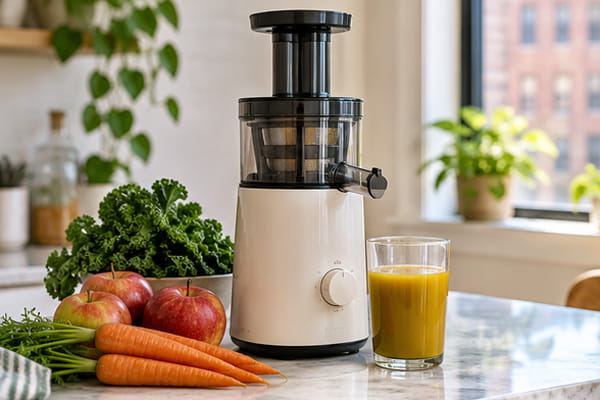
Finding the best cold press juicer for small kitchen spaces is about more than buying the smallest appliance available. The right juicer should fit comfortably on your counter, handle your favorite fruits and vegetables, and make cleanup manageable.
If you live in an apartment, have limited cabinet storage, or prepare juice for one or two people, a compact slow juicer can be a practical addition to your kitchen. However, not every model marketed as compact actually saves space.
Our top recommendation is the Nama J3 Cold Press Juicer for its balance of compact dimensions, convenient self-feeding design, and everyday usability. The Hurom H310 is another strong premium option, while the Shine Kitchen Co. Multi-Batch is especially appealing for narrow countertops.
This guide compares seven cold press juicers, explains their advantages and limitations, and helps you choose a model that fits your kitchen and routine.
Best Cold Press Juicers for Small Kitchens: Quick Comparison
| Juicer | Best For | Approximate Dimensions (W × D × H) |
|---|---|---|
| Nama J3 | Best overall | 8.9 × 6.5 × 15.4 in |
| Hurom H310 | Premium compact design | 6.2 × 6.75 × 15.5 in |
| Shine Multi-Batch SMB-1 | Narrow countertops | 7.2 × 6.1 × 15.2 in |
| Ninja NeverClog JC151 | Pulp control | 12.1 × 7.2 × 15.9 in |
| Cuisinart CSJ-300P1 | Dishwasher-friendly cleanup | 7.0 × 10.2 × 18.3 in |
| Shine Easy SJX-1 | Narrow footprint and larger chute | 7.0 × 5.8 × 17.3 in |
| Hurom H70 | Premium daily juicing | 6.8 × 8.5 × 17.2 in |
Dimensions are rounded from manufacturer specifications where available. Width and depth describe the main appliance body; allow additional working space for containers, feeding, and cleaning.
7 Best Cold Press Juicers for Small Kitchens
1. Nama J3 Cold Press Juicer — Best Overall
The Nama J3 stands out for people who want convenient slow juicing without dedicating a large section of their kitchen counter to one appliance.
Its compact body measures approximately 8.9 inches wide, 6.5 inches deep, and 15.4 inches tall. It weighs around 9.7 pounds, making it easier to move and store than many larger juicers.
Unlike traditional feed-chute designs, the J3 features a self-feeding hopper. You can load prepared ingredients into the chamber rather than continuously feeding individual pieces through a narrow opening.
This makes it particularly useful for busy mornings when you want to prepare juice while organizing breakfast.
Advantages:
- Compact footprint for everyday countertop use.
- Self-feeding design reduces continuous ingredient handling.
- Suitable for fruits, leafy greens, and vegetables.
- Long manufacturer warranty.
- Removable components can be cleaned individually.
Disadvantages:
- Premium purchase price.
- Smaller ingredient capacity than full-size models.
- Components require hand-washing.
Best for: Individuals or couples who juice regularly and value convenient operation more than the lowest purchase price.
The J3 is a particularly appealing choice when you want one dependable juicer that does not dominate your countertop.
2. Hurom H310 Easy Clean Slow Juicer — Best Premium Compact Design
The Hurom H310 offers a thoughtful solution for kitchens where every inch matters.
Measuring approximately 6.2 inches wide, 6.75 inches deep, and 15.5 inches tall, it has an exceptionally narrow footprint.
Its easy-clean chamber avoids the traditional fine-mesh strainer found in many juicers. This design can make rinsing and removing trapped pulp less frustrating.
The H310 also includes a self-feeding hopper, although its relatively small chamber means it is better suited to smaller servings.
Advantages:
- Very narrow countertop footprint.
- Strainer-free cleaning design.
- Self-feeding convenience.
- Lightweight construction.
- Suitable for single-person households.
Disadvantages:
- Expensive compared with basic juicers.
- Small chamber is less convenient for large batches.
- Some ingredients still need preparation.
Best for: Apartment residents who want a premium, easy-clean juicer for individual servings.
For someone who prepares one glass of juice most mornings, the H310 offers a good balance between compactness and convenience.
3. Shine Kitchen Co. Multi-Batch Compact Cold Press Juicer — Best for Narrow Countertops
The Shine Kitchen Co. Multi-Batch juicer is a practical option when storage space is your biggest concern.
Its approximately 7.2 × 6.1-inch footprint and 15.2-inch height make it easier to accommodate in tight kitchens.
Weighing only about 4.3 pounds, it is also convenient to lift from a cabinet or shelf.
The juicer includes a hopper and separate juice and pulp containers. It is designed for smaller households that want fresh juice without using a large appliance.
Advantages:
- Compact and lightweight.
- Small countertop footprint.
- Convenient for limited storage.
- Hopper supports multiple batches.
- Cleaning brushes are included.
Disadvantages:
- Hand-washing is required.
- Smaller ingredients may need additional chopping.
- Not intended for heavy-duty, high-volume juicing.
Best for: Students, renters, and anyone with limited kitchen storage.
If you want a compact appliance that can be stored after every use, this model deserves serious consideration.
4. Ninja NeverClog Cold Press Juicer JC151 — Best for Pulp Control
The Ninja NeverClog JC151 is worth considering if you prioritize adjustable juice texture.
Its distinguishing feature is the included pulp-control filters, which allow users to select different pulp levels.
The appliance also uses a slow-pressing mechanism instead of the high-speed spinning extraction found in centrifugal juicers.
However, its horizontal layout means it can occupy more counter width than narrow vertical designs.
Advantages:
- Adjustable pulp control.
- Useful for different fruit and vegetable combinations.
- Straightforward operating controls.
- Removable parts simplify cleaning.
- Practical alternative to expensive premium machines.
Disadvantages:
- Wider footprint than several vertical competitors.
- Requires ingredient preparation.
- Juice and pulp containers need additional space.
Best for: People who want more control over juice texture and have sufficient horizontal counter space.
Before purchasing, check the exact dimensions of the US model and whether the complete setup fits your available work surface.
5. Cuisinart Easy Clean Slow Juicer CSJ-300P1 — Best for Dishwasher-Friendly Cleanup
The Cuisinart Easy Clean Slow Juicer focuses on reducing the inconvenience associated with cleaning traditional masticating juicers.
Its mesh-free filter is designed to rinse under running water. Additionally, the manufacturer identifies its removable parts as top-rack dishwasher-safe.
This is a particularly useful feature for anyone who dislikes manually scrubbing intricate strainers.
The juicer measures approximately 7.0 inches wide, 10.2 inches deep, and 18.3 inches tall.
That makes it relatively narrow but noticeably taller than some competitors.
Advantages:
- Mesh-free filter design.
- Top-rack dishwasher-safe removable parts.
- Separate pulp collection.
- Straightforward operation.
- Useful for regular home juicing.
Disadvantages:
- Tall body may create cabinet-clearance problems.
- Narrow feeding requires preparation.
- Less suitable for extremely restricted vertical spaces.
Best for: Homeowners who prioritize practical cleanup and have enough vertical clearance.
If your kitchen has a dishwasher but limited time for cleaning, this model is a sensible option.
6. Shine Kitchen Co. Easy Cold Press Juicer SJX-1 — Best Narrow Juicer With a Larger Feed Chute
The Shine Easy SJX-1 offers another compact option, especially for people who want a narrow appliance without an extremely restrictive feeding opening.
Its manufacturer-listed dimensions are approximately 7 inches wide, 5.8 inches deep, and 17.3 inches tall.
The larger feed chute can reduce some ingredient preparation compared with smaller openings, although whole produce may still need cutting.
At approximately 5.3 pounds, the machine is also manageable to move between storage and the countertop.
Advantages:
- Very small countertop footprint.
- Larger feed chute.
- Lightweight body.
- Separate juice and pulp containers.
- Cleaning tools included.
Disadvantages:
- Taller than the Nama J3.
- Requires manual cleaning.
- Large batches may need more active attention.
Best for: Small households that want a narrow appliance and a convenient feeding design.
This model is especially attractive when countertop depth is limited.
7. Hurom H70 Easy Clean Slow Juicer — Best for Frequent Daily Juicing
The Hurom H70 is designed for people who want a premium slow juicer with more everyday versatility.
Its dimensions are approximately 6.8 inches wide, 8.5 inches deep, and 17.2 inches tall.
Although taller than the smallest models, its narrow vertical design makes it worth considering for kitchens with limited horizontal space.
The H70 belongs to Hurom’s Easy Clean range, which emphasizes a cleaning system that reduces dependence on traditional fine-mesh strainers.
Advantages:
- Narrow vertical footprint.
- Easy-clean design.
- Useful for frequent juicing.
- Premium construction.
- Appropriate for users seeking a longer-term appliance.
Disadvantages:
- Higher price.
- Additional vertical clearance is necessary.
- More machine than occasional users may need.
Best for: Regular juicers who want a premium appliance and have adequate cabinet clearance.
How to Choose the Best Cold Press Juicer for a Small Kitchen
Choosing the right model starts with understanding your available space and daily habits.
1. Measure Your Countertop
Start by measuring the width, depth, and height of the space where your juicer will sit.
Do not consider the machine’s footprint alone. You also need room for juice containers, pulp collection, and ingredient preparation.
For example, a 7-inch-wide juicer may fit perfectly in a narrow corner, but it still needs enough clearance for safe operation.
Check the height between your countertop and upper cabinets. Remember that feeding ingredients may require additional space above the appliance.
2. Consider How Often You Make Juice
If you prepare one small glass a few times a week, a compact, basic model may be sufficient.
However, daily juicing makes ease of assembly and cleaning more important.
For households preparing multiple servings, consider a larger hopper or a design that supports repeated batches.
3. Prioritize Easy Cleaning
Cleaning can influence whether you continue using your juicer after the initial excitement wears off.
Look for removable components, accessible pulp outlets, simple strainers, and manufacturer-approved dishwasher-safe parts.
A mesh-free design may be easier to rinse, but no juicer is completely maintenance-free.
4. Consider Your Favorite Ingredients
Different ingredients create different challenges.
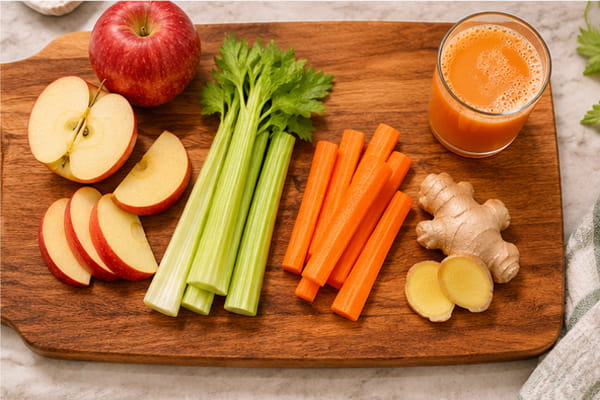
Leafy greens can wrap around internal components. Celery contains long fibers, while hard carrots may require smaller pieces.
Soft fruit can also produce different pulp textures.
Choose a juicer that supports the ingredients you use most often, and follow its preparation instructions.
5. Compare Long-Term Value
A low purchase price does not automatically mean better value.
Consider the manufacturer’s warranty, replacement-part availability, cleaning requirements, and whether you will realistically use the appliance regularly.
A slightly more expensive juicer that fits your routine may be a better investment than a cheaper machine that remains in storage.
Cold Press vs. Centrifugal Juicers: Which Is Better for a Small Kitchen?
Cold press juicers use an auger to crush and squeeze produce at relatively low speeds.
Centrifugal juicers generally use rapidly spinning blades and a filter basket to separate juice from pulp.
| Feature | Cold Press Juicer | Centrifugal Juicer |
|---|---|---|
| Extraction method | Slow crushing and pressing | High-speed spinning |
| Leafy greens | Often well suited | Performance varies |
| Operation | Generally slower | Generally faster |
| Cleaning | Depends on strainer design | Filter basket may require scrubbing |
| Price | Often higher | Many lower-cost choices |
| Footprint | Compact vertical models available | Compact models also available |
Neither extraction method is automatically healthier in every situation. Nutrient retention depends on the produce, processing conditions, and storage.
If you frequently juice leafy greens and appreciate a quieter preparation routine, a compact cold press model may be a good fit.
If speed and affordability matter most, a centrifugal juicer may also be worth considering.
How to Clean a Cold Press Juicer Properly
Proper cleaning protects your appliance and helps prevent residue buildup.
Step 1: Unplug the machine. Always disconnect the power before disassembly.
Step 2: Remove the containers. Empty the remaining juice and pulp.
Step 3: Disassemble removable components. Follow the manufacturer’s instructions rather than forcing parts apart.
Step 4: Rinse promptly. Fresh residue is usually easier to remove before it dries.
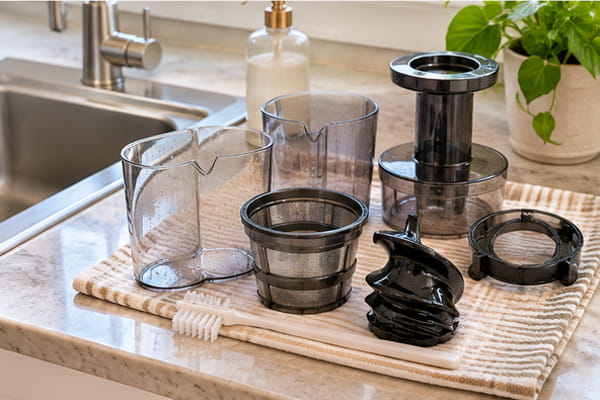
Step 5: Clean the strainer and pulp outlet. Use the supplied brush where necessary.
Step 6: Wash approved parts. Use mild dish soap and follow the manufacturer’s dishwasher guidance.
Step 7: Dry completely. Allow components to dry before reassembly and storage.
Never immerse the motor base in water.
For everyday convenience, keep a small cleaning brush near your kitchen sink and clean the machine immediately after juicing.
Common Mistakes When Buying a Compact Juicer
Choosing by width alone: A narrow juicer may still be too tall for your cabinets.
Ignoring cleaning requirements: Complicated cleanup can make an otherwise impressive appliance inconvenient.
Buying excessive capacity: A large machine may be unnecessary for one-person households.
Assuming every part is dishwasher-safe: Always verify the manufacturer’s care instructions.
Overlooking replacement parts: Availability of strainers, containers, and other components matters for long-term ownership.
Believing every nutritional marketing claim: Cold pressing does not automatically make a juice nutritionally superior to every alternative.
Fresh Juice Safety Tips
Freshly prepared juice can be enjoyable, but it should be handled carefully.
The U.S. Food and Drug Administration recommends washing produce thoroughly under running water, removing damaged areas, and practicing good hygiene when preparing juice.
Fresh home-pressed juice is generally unpasteurized. That means potentially harmful microorganisms are not eliminated by a pasteurization step.
Pregnant people, young children, older adults, and individuals with weakened immune systems should be especially cautious about unpasteurized juice.
Prepare juice with clean equipment, refrigerate it promptly, and avoid leaving it at room temperature unnecessarily.
For further guidance, consult the FDA’s food safety recommendations.
Frequently Asked Questions
What is the best cold press juicer for a small kitchen?
The Nama J3 is a strong overall choice because it combines compact dimensions with convenient self-feeding operation. The Hurom H310 is particularly attractive for narrow countertops.
What is the easiest cold press juicer to clean?
Models with mesh-free or strainer-free cleaning designs, such as the Hurom H310 and Cuisinart CSJ-300P1, are worth considering. Cleaning convenience depends on the parts and ingredients used.
Can a cold press juicer fit under kitchen cabinets?
Many compact juicers measure approximately 15–18 inches tall. Measure your cabinet clearance and allow extra room to access the feeding chamber.
Are compact juicers good for celery?
Many compact cold press juicers can process celery. Cutting long stalks into shorter pieces may help reduce fiber buildup, depending on the model.
Is a cold press juicer better than a blender?
They serve different purposes. Juicers separate much of the pulp, while blenders retain the whole blended ingredients, including more of their fiber.
Are cold press juicers dishwasher-safe?
Some models have dishwasher-safe removable parts, while others require hand-washing. Always follow the specific manufacturer’s instructions.
Is a compact cold press juicer worth buying?
It can be worthwhile if you enjoy fresh juice regularly and have sufficient counter or storage space. Occasional users should compare the cost and cleanup requirements before purchasing.
What should beginners look for in a juicer?
Beginners should prioritize simple assembly, easy cleaning, adequate kitchen clearance, reliable warranty support, and compatibility with their preferred ingredients.
Final Verdict: Which Compact Juicer Should You Buy?
The best cold press juicer for small kitchen use ultimately depends on your space, budget, and juicing routine.
For most regular home users, the Nama J3 offers an appealing balance of compact design and convenient operation.
If countertop width is especially limited, consider the Hurom H310 or Shine Multi-Batch.
For easier cleanup, the Cuisinart CSJ-300P1 deserves attention, particularly if you prefer dishwasher-safe removable parts.
Before purchasing, measure your kitchen, review the latest manufacturer specifications, and compare cleaning instructions.
A good juicer should not simply fit your kitchen. It should fit your everyday life.
As an Amazon Associate, I earn from qualifying purchases.