
As an Amazon Associate, I earn from qualifying purchases.
Setting up your first kitchen can feel overwhelming. However, stores and online guides often make it seem like you need every pan, gadget, and appliance before you can cook a decent meal. You do not need everything at once. Instead, a beginner kitchen should be simple, useful, and built around real meals.
This guide to Essential Kitchen Tools for Beginners will help you decide what to buy first, what can wait, and what to skip so you can save money, avoid clutter, and build a kitchen that actually works.
Quick Answer: What Should Beginners Buy First?
Start with tools that help you prep, cook, store, and clean. Do not buy everything at once.
| Buy First | Buy Later | Skip for Now |
|---|---|---|
| Skillet or everyday pan | Dutch oven | Single-use slicers |
| Medium saucepan | Food processor | Electric egg cooker |
| Large pot | Blender | Oversized cookware set |
| Sheet pan | Cast iron skillet | Novelty gadgets |
| Cutting board | Kitchen scale | Large knife block |
| Measuring cups and spoons | Specialty bakeware | Bulky appliances |
| Mixing bowl | Immersion blender | Decorative serving tools |
| Spatula, spoon, and tongs | Roasting pan | Gadget bundles |
| Colander | Advanced organizers | Tools for one ingredient |
| Food storage containers | Extra appliances | Anything hard to store |
The best beginner kitchen is not the biggest kitchen. It is the one that helps you cook simple meals without wasting space.
The Smart Beginner Rule: Buy by Use, Not by Hype
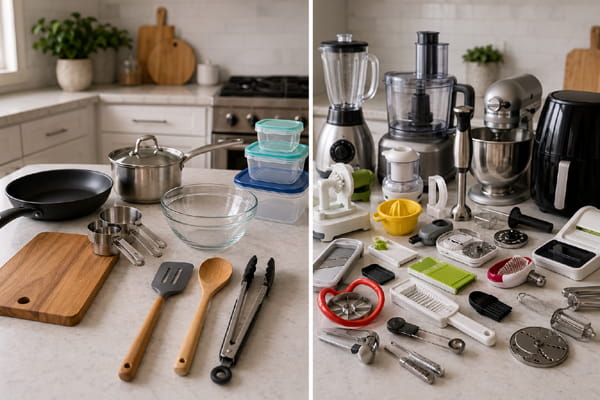
Many beginners buy kitchen tools because they look useful, not because they solve a real problem. As a result, drawers get crowded and cabinets fill up with items nobody uses.
Before buying anything, ask four questions:
- Will I use this every week?
- Can another tool already do this job?
- Is it easy to clean?
- Do I have space to store it?
If a tool solves several common problems, it belongs near the top of your list. If it solves one rare problem, wait.
A skillet can cook eggs, vegetables, pancakes, grilled sandwiches, and quick dinners. A banana slicer only slices bananas. That difference matters when you are building a kitchen on a budget.
Essential Kitchen Tools for Beginners
1. Basic Cookware
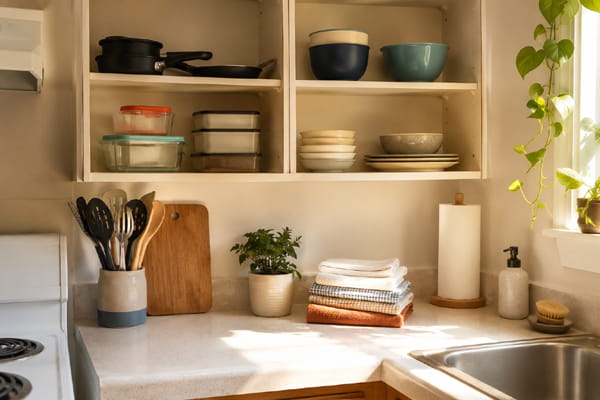
Start with a skillet or everyday pan, a medium saucepan, a large pot, and a sheet pan. These four pieces cover most beginner meals.
A skillet is one of the kitchen tools beginners actually need. You can use it for eggs, vegetables, quesadillas, burgers, stir-fries, pancakes, and quick weeknight meals. Choose one that feels comfortable to lift and fits your stove.
A medium saucepan is useful for oatmeal, rice, soup, pasta sauce, boiled eggs, and reheating leftovers. A large pot helps with pasta, potatoes, chili, soup, and cooking for more than one person.
A sheet pan is one of the best budget kitchen tools for beginners. It works for roasted vegetables, baked chicken, frozen foods, toast, cookies, and one-pan dinners.
You do not need a full cookware set at the beginning. Many sets include pieces you may rarely use. Start with the basics, then upgrade when your cooking habits become clearer.
2. Food Prep Tools
Food prep becomes much easier with a few reliable basics: a cutting board, a safe food-prep cutting tool, a peeler, a can opener, and a colander.
A cutting board gives you a stable place to prepare vegetables, fruit, sandwiches, herbs, and simple meals. Choose one that is large enough to work on comfortably and easy to wash. Keep your prep area clear, use a stable surface, and store sharp kitchen items safely when not in use.
A peeler helps with potatoes, carrots, cucumbers, apples, and other everyday ingredients. A can opener is essential if you use beans, tomatoes, tuna, soup, or pantry staples. A colander helps drain pasta, rinse produce, wash canned beans, and clean grains.
Although these tools are simple, they make cooking smoother from the first week.
3. Measuring and Mixing Tools
Measuring cups and spoons are essential if you follow recipes. They help beginners avoid guesswork and make meals more consistent. You will use them for rice, oatmeal, baking, sauces, marinades, soups, and dressings.
A mixing bowl is another must-have. It can be used for salads, pancake batter, seasoning vegetables, marinating food, mixing dough, tossing pasta, or serving snacks. If you have a small kitchen, choose nesting bowls that stack inside each other.
A liquid measuring cup is helpful, especially for broth, milk, oil, water, and sauces. A kitchen scale is useful for frequent baking, but most beginners can buy it later.
4. Everyday Cooking Utensils
A small set of cooking utensils is better than a crowded drawer. Start with a spatula, wooden spoon, tongs, whisk, and ladle.
A spatula helps with eggs, pancakes, burgers, and skillet meals. A wooden spoon is useful for soups, sauces, pasta, and sautéing. Tongs help with pasta, salads, roasted vegetables, and turning food. A whisk is useful for eggs, dressings, sauces, and simple batters. A ladle makes soup and chili easier to serve.
Choose utensils that feel comfortable and are easy to clean. If you use nonstick cookware, choose tools that will not scratch the surface.
5. Baking Basics
Even if you are not a serious baker, a few baking basics are useful. A sheet pan, mixing bowl, measuring cups, measuring spoons, and whisk can handle cookies, banana bread, muffins, simple cakes, roasted vegetables, and sheet-pan dinners.
If you bake often, add a loaf pan, muffin pan, cooling rack, and kitchen scale later. A stand mixer is helpful for regular bakers, but it is usually not necessary for beginners.
6. Storage and Organization
Food storage containers are essential for leftovers, meal prep, packed lunches, chopped produce, and pantry organization. Choose a few practical sizes instead of buying a huge mixed set.
Good containers help reduce food waste and make cooking at home easier. For example, if you cook once and store leftovers for another meal, you save time and money.
For small kitchen essentials, storage matters as much as the tool itself. Before buying anything, think about where it will go. If you cannot store it easily, it may become clutter.
7. Cleaning Basics
A useful kitchen needs simple cleaning tools: dish soap, a sponge or brush, dish towels, a drying rack or mat, trash bags, and surface cleaner.
This part may not feel exciting, but it matters. A kitchen that is easy to clean is a kitchen you are more likely to use.
What to Buy First If You Are on a Budget
Minimal Starter Kitchen
A minimal starter kitchen should include a skillet, saucepan, cutting board, measuring cups, measuring spoons, spatula, wooden spoon, mixing bowl, colander, can opener, dish towel, and food storage containers.
This setup is enough for eggs, pasta, oatmeal, rice, soup, sandwiches, vegetables, and leftovers.
Better Everyday Setup
If you cook several times a week, add a large pot, sheet pan, tongs, whisk, peeler, ladle, oven mitts, and more storage containers. This setup gives you more flexibility for dinners, meal prep, and first apartment kitchen essentials.
More Complete Beginner Setup
A more complete beginner setup can include nesting bowls, a second sheet pan, liquid measuring cup, food thermometer, small baking pan, drawer organizer, and upgraded utensils.
Do not measure value only by price. A cheap tool that breaks quickly is not always a good deal. Spend more on tools you use often, and save money by skipping tools you do not need.
Kitchen Tools Beginners Can Buy Later
Some tools are useful, but not urgent. A Dutch oven, blender, food processor, cast iron skillet, roasting pan, immersion blender, and kitchen scale can all be good purchases later.
The right time depends on your cooking habits. For example, a blender may be worth buying if you make smoothies every morning. Similarly, a kitchen scale is useful if you bake often. A Dutch oven can also become useful if you regularly cook soups and stews.
Buying later is a better strategy than guessing. It helps you build a kitchen around your real routine.
Kitchen Gadgets Beginners Should Skip
Kitchen gadgets beginners should skip are usually the ones that solve only one small problem. Examples include avocado slicers, banana slicers, electric egg cookers, oversized knife blocks, novelty tools, and bulky appliances you do not have space for.
The problem is not that these tools never work. Instead, they often do a job a basic tool can already do. In addition, they take up space, cost money, and add more items to clean.
Beginners should also be careful with full cookware sets and gadget bundles. These can look attractive, but they often include duplicates or tools that do not match your cooking style.
A smart kitchen is not a crowded kitchen. It is a kitchen where every item earns its place.
First Apartment and Small Kitchen Tips
When setting up your first apartment kitchen, think small, useful, and easy to move. Choose compact tools that fit your cabinets, sink, and counter space.
Avoid oversized pans if your stove is small. Choose nesting bowls, stackable containers, and tools that store neatly. Keep counters clear so you have room to prep food.
Small kitchens work best when you avoid duplicates. You probably do not need five spatulas, three strainers, and two bulky appliances. Start with one good version of each basic tool.
For renters, students, and young professionals, portability matters. Buy tools you can take with you if you move.
The 7-Day Test Before Buying More
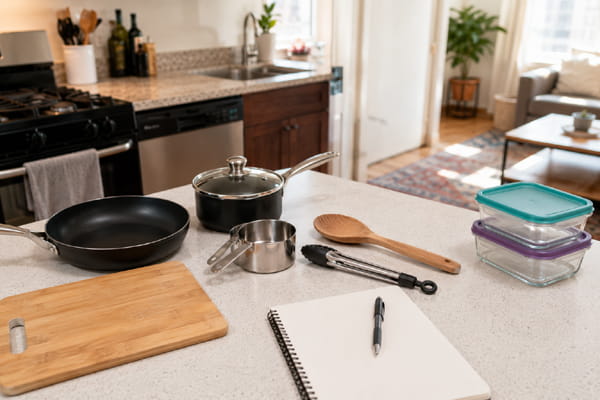
Here is a simple way to know what to buy next. Cook with your basic tools for one week. During that week, write down anything that slows you down more than once.
For example, if you keep needing a larger pot, buy one. Also, add tongs if you keep wishing you had them. However, wait if you only wanted a gadget one time.
This test makes your kitchen personal. Instead of copying someone else’s list, you build around your real meals, real space, and real routine.
Common Beginner Mistakes
One common mistake is buying too much at once. Although a full kitchen setup may feel exciting, it can lead to clutter and wasted money.
Another common mistake is choosing gadgets over basics. However, a trendy tool will not help much if you do not have a reliable pan, mixing bowl, or storage container.
Many beginners also forget about cleaning. Therefore, if a tool is annoying to wash, you may stop using it.
Storage is another problem. Before buying a large item, ask where it will go. If it has no place, it may end up on the counter forever.
Finally, do not buy the cheapest version of every tool. Budget-friendly is good, but weak tools can bend, crack, stain, or break. Choose practical quality for the tools you use every week.
Simple Starter Kitchen Checklist
Must-Have
- Skillet or everyday pan
- Medium saucepan
- Large pot
- Sheet pan
- Cutting board
- Measuring cups and spoons
- Mixing bowl
- Spatula
- Wooden spoon
- Tongs
- Colander
- Can opener
- Peeler
- Dish towels
- Food storage containers
Helpful but Optional
- Whisk
- Ladle
- Liquid measuring cup
- Nesting bowls
- Oven mitts
- Food thermometer
- Drawer organizer
- Second sheet pan
- Small baking pan
Wait Until Needed
- Stand mixer
- Food processor
- Dutch oven
- Blender
- Cast iron skillet
- Roasting pan
- Specialty slicers
- Oversized cookware set
- Bulky countertop gadgets
Final Thoughts
Essential Kitchen Tools for Beginners should make cooking easier, not more complicated. You do not need every gadget or a perfect matching set. You need reliable basics that fit your meals, budget, and space.
Start with multi-purpose tools, cook for a while, and notice what you actually use. After that, upgrade slowly. This approach helps you save money, avoid clutter, and build a kitchen that supports everyday cooking.
FAQ
What kitchen tools should a beginner buy first?
A beginner should buy a skillet, saucepan, large pot, sheet pan, cutting board, measuring cups and spoons, mixing bowl, spatula, wooden spoon, tongs, colander, can opener, peeler, dish towels, and food storage containers.
What kitchen tools are not necessary for beginners?
Most beginners do not need single-use slicers, electric egg cookers, oversized cookware sets, stand mixers, food processors, or bulky countertop gadgets right away.
What do I need for my first apartment kitchen?
First apartment kitchen essentials include basic cookware, prep tools, measuring tools, utensils, storage containers, dish towels, and simple cleaning supplies.
How much should I spend on beginner kitchen tools?
Spend based on your budget and cooking habits. Start with reliable basics, avoid unnecessary gadgets, and upgrade the tools you use most often.
Are expensive kitchen gadgets worth it for beginners?
Usually not at first. Beginners should focus on multi-purpose basics before buying expensive gadgets or specialty appliances.
Should I buy a full cookware set as a beginner?
Not always. A full cookware set may include pieces you rarely use. Most beginners are better off starting with a few practical items.
How can I build a kitchen slowly on a budget?
Start with must-have tools, cook for a week, notice what slows you down, and buy only the tools that solve repeated problems.
As an Amazon Associate, I earn from qualifying purchases.