
As an Amazon Associate, I earn from qualifying purchases.
A great cup of coffee should still taste enjoyable when you return for a refill. Unfortunately, traditional drip coffee makers with warming plates can continue heating brewed coffee, sometimes making the last cup less appealing than the first.
Choosing the best drip coffee maker with thermal carafe can help solve that problem. Instead of relying on continuous heat from a warming plate, these machines use insulated carafes to slow heat loss while preserving the convenience of automatic brewing.
For most households, the OXO Brew 8-Cup Coffee Maker is an excellent starting point because it combines a vacuum-insulated carafe, SCA-certified brewing, and single-cup flexibility. The Technivorm Moccamaster KBT is particularly appealing for straightforward full-pot brewing, while the Fellow Aiden offers advanced control over brewing recipes.
This Sweet-crush buying guide compares five options, explains important features, and shows how to choose a brewer that suits your daily routine.
Editor’s note: Recommendations are based on published manufacturer specifications and coffee-industry certification information, not independent hands-on testing by Sweet-crush. Product availability, prices, and configurations may change.
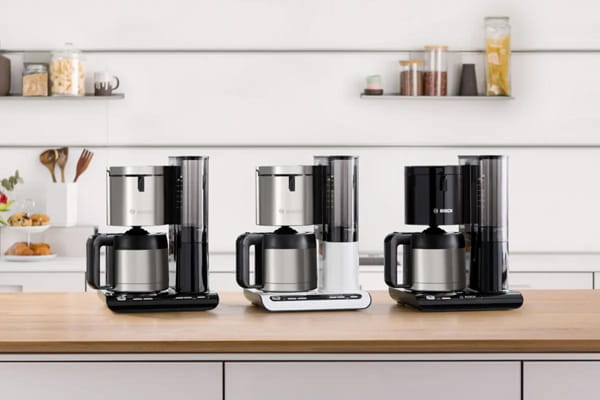
Quick Answer: Which Thermal Carafe Coffee Maker Should You Buy?
The ideal coffee maker depends on how much coffee you drink, whether you need programmable brewing, and how much control you want over extraction.
Our research-based recommendations are:
- Best for most households: OXO Brew 8-Cup Coffee Maker
- Best for durability-focused buyers: Technivorm Moccamaster KBT
- Best for brewing customization: Fellow Aiden Precision Coffee Maker
- Best for simple operation: Bonavita Enthusiast 8-Cup Thermal
- Best for versatile drink settings: Breville Luxe Brewer Thermal
Each machine approaches automatic brewing differently. The best choice is the one that matches your regular batch size and the features you will actually use.
Best Drip Coffee Makers With Thermal Carafes Compared
| Coffee Maker | Capacity | Standout Feature | Best For |
|---|---|---|---|
| OXO Brew 8-Cup | 8 coffee-maker cups | Single-cup and full-carafe brewing | Everyday households |
| Moccamaster KBT | 40 fl oz | Manual drip-stop and repair support | Full-pot brewing |
| Fellow Aiden | Up to 1.5 L | Customizable brewing profiles | Coffee enthusiasts |
| Bonavita Enthusiast Thermal | Approximately 40 fl oz | Straightforward brewing and pre-infusion | Simple daily brewing |
| Breville Luxe Brewer Thermal | 60 fl oz | Customizable brewing and cold extraction | Larger households |
Note: Manufacturers use different coffee-cup measurements. Compare capacities in fluid ounces rather than assuming that an 8-cup coffee maker produces eight standard 8-ounce servings.
1. OXO Brew 8-Cup: Best for Most Households
The OXO Brew 8-Cup Coffee Maker offers a useful balance of brewing consistency, everyday convenience, and versatility.
Its BetterBrew system manages important brewing variables, including water temperature and brewing time. The Rainmaker showerhead distributes water over the grounds, while an integrated bloom cycle helps prepare freshly ground coffee for extraction.
A double-wall, vacuum-insulated thermal carafe holds brewed coffee without requiring a warming plate.
One especially useful feature is the ability to brew directly into a mug instead of making a full carafe. This flexibility is attractive for couples, remote workers, and people whose coffee needs change from day to day.
Advantages
- SCA-certified brewing system
- Insulated stainless steel carafe
- Single-cup and carafe brewing options
- Simple, approachable controls
- Suitable for many everyday routines
Disadvantages
- Less brewing customization than advanced competitors
- The carafe requires regular cleaning
- Buyers seeking scheduled brewing should consider other models
Best for: Households that alternate between individual servings and larger morning batches.
2. Technivorm Moccamaster KBT: Best for Straightforward Full-Pot Brewing
The Moccamaster KBT is designed for people who value a reliable brewing process and straightforward operation over digital menus.
Its 40-fluid-ounce capacity makes it suitable for several servings. The machine uses a glass-lined thermal carafe and a manually adjustable drip-stop basket.
The manual drip-stop provides some control over the flow of brewed coffee, although it requires more attention than an entirely automatic basket.
The KBT is also listed among the Specialty Coffee Association’s certified home brewers. Its manufacturer-backed warranty and emphasis on serviceable components make it an appealing long-term purchase.
Advantages
- SCA-certified brewing
- Straightforward controls
- Thermal carafe without continuous reheating
- Manual flow adjustment
- Strong manufacturer support
Disadvantages
- No built-in delayed-start programming
- Higher purchase cost than many basic drip brewers
- Manual basket operation requires attention
- Glass-lined carafe needs careful handling
Best for: Coffee drinkers who usually brew a full pot and value durability over extra settings.
3. Fellow Aiden: Best for Coffee Enthusiasts
The Fellow Aiden Precision Coffee Maker is designed for users who enjoy experimenting with different coffee beans, roast styles, and brewing recipes.
Unlike conventional machines with only a few buttons, Aiden offers programmable brewing profiles, controlled water delivery, and adjustments that can affect extraction.
It supports single-serving brewing and larger batches using its included thermal carafe. Its maximum batch capacity is approximately 1.5 liters.
The removable water reservoir is convenient for filling, while the relatively compact footprint may appeal to smaller kitchens. However, users should check vertical clearance before purchasing.
Aiden’s thermal carafe does not sit on a hot plate. Fellow also notes that smaller batches naturally lose heat more quickly in a large carafe because of the additional air space.
Advantages
- Customizable brewing profiles
- Single-serving and batch brewing
- Double-wall thermal carafe
- Removable water reservoir
- Useful for exploring different coffee recipes
Disadvantages
- More complicated than a basic one-button brewer
- Advanced controls may be unnecessary for casual users
- Smaller batches may cool faster in the large carafe
- Higher price category
Best for: Coffee enthusiasts who want automatic brewing with greater recipe control.
4. Bonavita Enthusiast 8-Cup Thermal: Best for Simple Brewing
The Bonavita Enthusiast 8-Cup Thermal is worth considering if you prefer straightforward operation without an extensive control interface.
Bonavita focuses on important brewing fundamentals, including water distribution and an optional pre-infusion step.
The pre-infusion feature briefly wets coffee grounds before the main brewing cycle. This can be particularly useful with freshly roasted coffee, which releases gas when it first contacts water.
The removable water reservoir is another practical advantage for users who dislike carrying a pitcher across the kitchen.
The thermal version provides insulated storage after brewing. Be careful to select the correct carafe configuration, since Bonavita also sells glass-carafe versions.
Advantages
- Straightforward brewing approach
- Optional pre-infusion
- Removable water tank
- SCA-certified model family
- Thermal-carafe configuration available
Disadvantages
- Fewer personalized settings than premium machines
- Limited programmability
- Model versions and included carafes require verification before purchase
Best for: Buyers who want a capable automatic drip brewer with minimal daily adjustments.
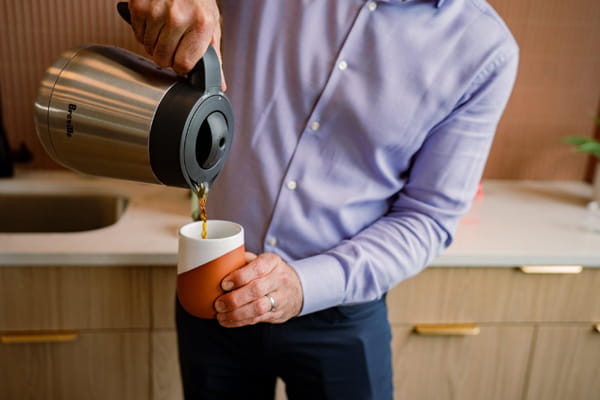
5. Breville Luxe Brewer Thermal: Best for Versatility
The Breville Luxe Brewer Thermal appeals to households that want more brewing flexibility than a basic drip coffee maker provides.
Its larger 60-fluid-ounce capacity is useful when several people need coffee in the morning or when guests visit.
Breville offers customizable brewing settings alongside a cold-extraction option. This makes the machine more versatile for households that drink different styles of coffee throughout the week.
Its insulated thermal carafe allows users to serve brewed coffee without depending on a continuous warming plate.
However, buyers who only need a simple morning pot may find that the additional controls are unnecessary.
Advantages
- Larger batch capacity
- Customizable brewing options
- Cold-extraction capability
- Insulated thermal carafe
- Suitable for households with varied preferences
Disadvantages
- More features to learn
- Larger capacity may be unnecessary for one person
- Premium price category
- More settings can mean greater operational complexity
Best for: Larger households and coffee drinkers who enjoy different brewing styles.
Thermal Carafe vs. Glass Carafe: Which Is Better?
Thermal and glass carafes serve the same basic purpose, but they preserve coffee differently.
A glass carafe typically works with a warming plate that maintains the coffee’s temperature after brewing. This arrangement makes it easy to see how much coffee remains, but prolonged heating may affect flavor.
A thermal carafe uses insulation to slow heat transfer. It usually does not require a warming plate, making it useful for people who drink coffee over a longer period.
| Feature | Thermal Carafe | Glass Carafe |
|---|---|---|
| Heat management | Passive insulation | Often uses a hot plate |
| Continued heating | Usually unnecessary | Often required |
| Visibility | Coffee level usually hidden | Coffee level visible |
| Portability | Often convenient | Usually less convenient |
| Cleaning | Narrow openings may be challenging | Often easier to inspect |
| Breakage | Depends on internal liner | Glass may break if dropped |
Neither design automatically produces better coffee. Extraction quality depends primarily on the brewer, coffee, water, and brewing process.
For households that want to avoid continuous reheating, a thermal carafe is often the more practical choice.
How to Choose the Best Drip Coffee Maker With Thermal Carafe
Check Brewing Temperature and Certification
A brewer must deliver water at an appropriate temperature for effective coffee extraction.
The Specialty Coffee Association certifies home brewers against standards that address key brewing-performance characteristics.
Certification is a useful buying signal, although it does not guarantee that every coffee, grind setting, or brewing recipe will taste perfect.
Choose the Right Capacity
Capacity matters more than the number printed on the box.
Many coffee makers define a cup as roughly five fluid ounces rather than the eight ounces commonly used in US kitchen measurements.
For example, a 40-ounce brewer produces about five 8-ounce servings before accounting for any brewing losses.
If you normally drink one or two mugs, a smaller brewer or a model with dedicated single-cup brewing may be more convenient.
Evaluate the Thermal Carafe
Look for double-wall insulation, a secure lid, and a comfortable pouring handle.
A wide opening can make cleaning easier. You should also consider whether the carafe can be replaced separately if damaged.
Not all thermal carafes retain heat equally, and actual performance changes with batch size, starting temperature, and room conditions.
Consider Programmable Features
A delayed-start timer is useful when you want coffee ready shortly after waking up.
However, advanced programming is not essential for everyone. If you brew coffee while preparing breakfast, a simple machine may be easier to operate.
Choose features based on your real routine rather than the longest specification list.
Check Cleaning and Maintenance
Coffee oils collect inside brew baskets and carafes. Mineral deposits can also build up within the machine.
Before purchasing, investigate how easily you can remove the water tank, clean the carafe, replace filters, and descale the brewer.
A machine that is simple to maintain is more likely to fit comfortably into daily use.
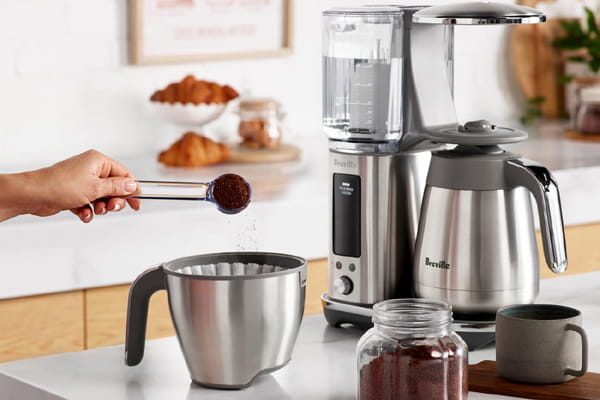
How to Keep Coffee Hot Without Ruining the Flavor
Even an excellent thermal carafe benefits from careful preparation.
Step 1: Preheat the carafe. Add hot water, let the interior warm briefly, and empty it before brewing. Follow the manufacturer’s handling instructions.
Step 2: Use fresh coffee. Freshly ground beans can help produce a more aromatic cup.
Step 3: Measure your ingredients. Start with a consistent coffee-to-water ratio and adjust according to taste.
Step 4: Brew an appropriate batch. Very small amounts may cool faster inside a large insulated carafe.
Step 5: Close the lid promptly. Reducing the time the carafe remains open helps limit heat loss.
Step 6: Pour only what you need. Frequent opening and pouring may allow additional heat to escape.
For the freshest flavor, brew an amount you expect to drink within a reasonable period rather than storing the same batch all day.
Common Mistakes to Avoid
Assuming every thermal carafe performs identically: Insulation, lid design, and batch size all influence heat retention.
Choosing capacity based only on the cup count: Manufacturer cup measurements may not match the size of your favorite mug.
Ignoring counter clearance: Some coffee makers need additional height when their lids open.
Buying unnecessary features: Complex brewing controls provide little value if you never adjust them.
Neglecting cleaning: Residual coffee oils and mineral buildup can affect daily use and brewing quality.
Confusing brewing temperature with serving temperature: Water used for extraction is hotter than coffee at a comfortable drinking temperature.
Frequently Asked Questions
1. What is the best drip coffee maker with a thermal carafe?
The OXO Brew 8-Cup is a strong all-around option for everyday households. The Moccamaster KBT suits buyers prioritizing straightforward full-pot brewing, while Fellow Aiden offers greater customization.
2. How long will a thermal carafe keep coffee hot?
There is no universal holding time. Performance depends on insulation, lid design, batch volume, starting temperature, and ambient conditions. Manufacturer estimates should not be treated as guaranteed results.
3. Is a thermal carafe better than a glass carafe?
A thermal carafe is often preferable if you want to avoid continuous heating. Glass can be easier to inspect and may be convenient if you usually drink coffee immediately after brewing.
4. Do thermal coffee makers need a warming plate?
Usually not. The insulated carafe slows heat loss without continuously adding heat. Always check the exact machine’s design.
5. Does SCA certification matter?
Yes, it can be a useful quality indicator. SCA certification evaluates important brewing characteristics, but coffee freshness, water quality, and grind size still matter.
6. Should I buy an 8-cup or 12-cup coffee maker?
Choose according to the actual fluid-ounce capacity and your normal serving size. An 8-cup brewer may be sufficient for a couple, while larger households may prefer more capacity.
7. Can I put a thermal coffee carafe in the dishwasher?
Only if the manufacturer explicitly approves it. Some carafes contain liners, seals, or insulated components that require handwashing.
8. How do I clean a stained thermal carafe?
Use a cleaning product recommended by the manufacturer, rinse thoroughly, and avoid abrasive tools that could damage the interior. Follow the product manual for safe cleaning instructions.
Final Verdict: Which Coffee Maker Is Worth Buying?
Finding the best drip coffee maker with thermal carafe is ultimately about matching brewing performance with your daily habits.
For many US households, the OXO Brew 8-Cup offers a compelling balance of convenience, certification, and serving flexibility.
The Technivorm Moccamaster KBT is worth considering if you favor simple controls and long-term service support. Fellow Aiden is a more natural fit if experimenting with brewing recipes is part of your coffee routine.
Before purchasing, compare the exact model’s current price, warranty, capacity, counter dimensions, and maintenance requirements.
As an Amazon Associate, I earn from qualifying purchases.