
As an Amazon Associate, I earn from qualifying purchases.
If you are trying to reduce plastic in your kitchen, a cutting board is a practical place to start. A 2023 study in Environmental Science & Technology found that polyethylene and polypropylene cutting boards can release microplastic particles during chopping. The research confirms an exposure pathway, but it does not prove that normal use of a plastic board causes human disease.
For most U.S. home cooks, our research-based best overall pick is the John Boos Chop-N-Slice Maple Cutting Board. If you want the simplest material list possible, Treeboard and Salzmark make single-piece maple boards without glued wood strips.
In this guide, “plastic-free” means the food-prep surface and board body are not made from polyethylene, polypropylene, or a plastic-rich composite. Some multi-piece wood and bamboo boards still use food-contact adhesives, and some boards have optional rubber or silicone feet. Buyers who want no glue or added finish should choose a clearly disclosed single-piece option.
Quick Answer: What Is the Best Non-Toxic Cutting Board?
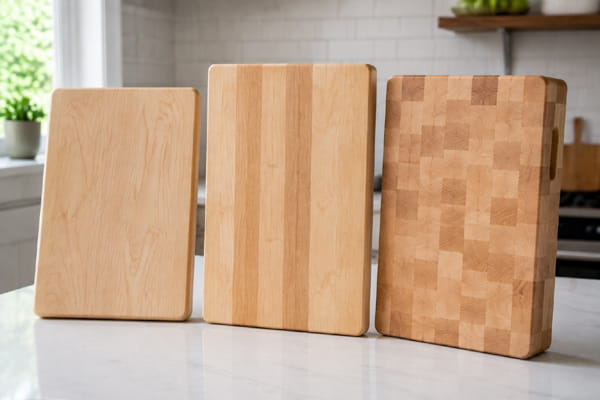
A well-maintained hardwood cutting board is a strong choice for everyday prep. Hard maple is especially notable because the FDA Food Code recognizes hard maple or an equivalently hard, close-grained wood for cutting boards in food establishments. For home kitchens, USDA guidance allows wood or nonporous boards and emphasizes cleaning, separating raw animal foods from ready-to-eat foods, and replacing badly worn boards.
| Pick | Best for | Material | Approx. verified price* |
|---|---|---|---|
| John Boos Chop-N-Slice Maple | Best overall | Hard maple | $61.95 |
| Treeboard Medium Maple | Best glue-free everyday board | Single-piece hard maple | $119 |
| Salzmark One | Best minimal-ingredient board | Unfinished single-piece maple | $245 |
| The Boardsmith Maple End Grain | Best premium end-grain board | FSC-certified maple | From about $230 |
| Teakhaus Traditional 107 | Best large prep board | FSC-certified teak | $155 |
| Virginia Boys Kitchens Medium Walnut | Best walnut board | American black walnut | $85 |
| Totally Bamboo Kauai | Best budget pick | Moso bamboo | $19.99 |
*Prices were checked on manufacturer pages on August 30, 2026 and can change.
How We Chose These Boards
Sweet-crush did not conduct hands-on laboratory or long-term durability testing for this guide. These recommendations are based on current manufacturer specifications, material disclosure, construction, size, maintenance, U.S. availability, food-contact information, and authoritative food-safety guidance.
We favored brands that identify their wood species, finish, adhesive or glue-free construction where possible, and care requirements. We did not treat broad marketing terms such as “chemical-free” as proof of safety.
What Makes a Cutting Board “Non-Toxic”?
There is no single universal “non-toxic cutting board” certification that settles every material question. Instead, check the cutting surface, construction, finish, and condition.
Cutting-Surface Material
Hardwoods such as maple and walnut avoid a plastic cutting surface. Bamboo does too, although most bamboo boards are assembled from strips and require adhesive.
Glue and Construction
Single-piece boards can eliminate adhesive. Multi-piece edge-grain and end-grain boards need bonding. The Boardsmith states that it uses Titebond III, which Titebond identifies as compliant for indirect food contact. Teakhaus identifies its adhesive system, while Totally Bamboo states that its boards use food-safe adhesive.
Finish
Many wood boards are conditioned with food-grade mineral oil, beeswax, plant oils, or proprietary balms. A finish is not automatically a problem; clear ingredient disclosure and proper use matter.
Edge Grain vs. End Grain
Edge-grain boards expose the long side of the wood fibers and are usually thinner, lighter, and less expensive. End-grain boards arrange the fiber ends upward, creating a thicker butcher-block surface that many cooks value for knife friendliness and durability.
End grain is not automatically “safer” or “more non-toxic.” Its main advantages are performance and feel, while its tradeoffs are higher price, greater weight, and more glued joints.
Wear and Hygiene
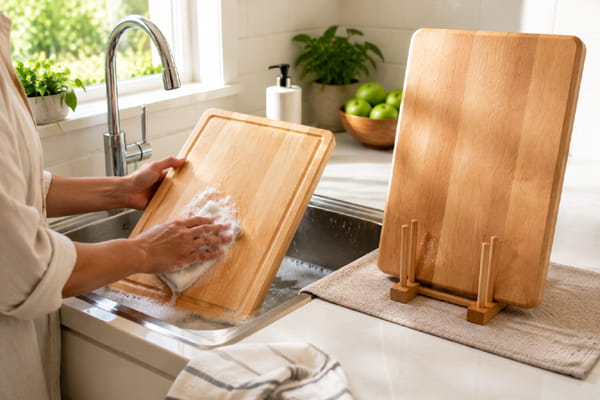
USDA recommends hot, soapy water after use and replacing boards once grooves become excessively worn and difficult to clean. A separate board for raw meat, poultry, and seafood also helps reduce cross-contamination.
7 Best Non-Toxic Cutting Boards for 2026
1. John Boos Chop-N-Slice Maple Cutting Board — Best Overall
The 18-by-12-inch Chop-N-Slice offers a useful everyday size. John Boos lists Northern Hard Rock Maple, edge-grain construction, a reversible surface, oil finish, and NSF certification for the series. At roughly 1¼ inches thick, it is substantial without being as cumbersome as a two-inch butcher block.
Best for: home cooks who want a durable maple board from an established U.S. manufacturer.
Keep in mind: it is laminated wood rather than a single-piece, glue-free slab.
2. Treeboard Medium Maple Cutting Board — Best Glue-Free Everyday Board
Treeboard’s medium board is made from one solid piece of hard maple. It measures about 10 by 13 inches and is roughly 1¼ inches thick. The company uses raw linseed oil and a plant-based balm, while allowing buyers to request an unfinished board.
Best for: buyers who want single-piece construction and a transparent plant-based finish.
Keep in mind: omit the optional silicone rubber feet if you want the simplest configuration.
3. Salzmark One — Best Minimal-Ingredient Board
Salzmark’s One is carved from a single piece of American hard maple and sold unfinished, with no glue, oil, wax, or added coating. The cutting area is 9 by 13 inches, and the handle helps the board stand for air drying.
Best for: shoppers who define “non-toxic” as using as few added materials as possible.
Keep in mind: untreated wood can show stains and natural color changes more readily than conditioned wood.
4. The Boardsmith Maple End Grain Cutting Board — Best Premium End-Grain Pick
The Boardsmith offers FSC-certified maple in substantial end-grain sizes, starting with a 12-by-18-by-2-inch format. The company discloses Titebond III adhesive, food-safe mineral oil, and beeswax-based board butter.
Best for: frequent cooks who want a heavy, premium work surface that is gentle on knife edges.
Keep in mind: it is expensive, heavy, and needs periodic conditioning.
5. Teakhaus Traditional Cutting Board 107 — Best Large Prep Board
At 24 by 18 by 1½ inches and about 15 pounds, the Teakhaus Traditional 107 provides generous workspace. It uses FSC-certified teak, edge-grain construction, hand grips, and a reversible design. Teakhaus says it arrives pre-oiled with mineral oil and natural beeswax and publicly identifies its adhesive.
Best for: batch cooking, large vegetables, roasts, and spacious counters.
Keep in mind: its size can be awkward in small sinks and kitchens.
6. Virginia Boys Kitchens Medium Walnut Cutting Board — Best Walnut Pick
This 17-by-11-inch board uses American black walnut and is handcrafted in the United States. One face has a juice groove, while the reverse is flat. At about ¾ inch thick, it is easier to lift and wash than a large butcher block, and the maker says it arrives pre-seasoned.
Best for: shoppers who want a lighter hardwood board with a darker appearance.
Keep in mind: a thinner board has less heft than a thick butcher block.
7. Totally Bamboo Kauai Cutting Board — Best Budget Pick
The Kauai measures 14½ by 11½ by ⅝ inch and is far less expensive than premium hardwood options. Totally Bamboo says it is made from Moso bamboo, assembled with food-safe adhesive, and finished with mineral oil.
Best for: budget-conscious shoppers and light everyday prep.
Keep in mind: bamboo is comparatively hard, and this board is glued rather than single-slab construction.
How to Choose the Best Non-Toxic Cutting Board
Start with size. Around 12 by 18 inches works well in many home kitchens, while a 24-by-18-inch board needs generous counter and sink space. Next, decide whether you value low weight or maximum stability. Thick end-grain boards stay planted but are harder to wash and store.
Then check construction. If avoiding adhesive is a priority, choose a single-piece board. If you prefer end grain, expect glued construction and look for clear adhesive disclosure. Finally, check the finish and care directions instead of assuming every wood board is maintained the same way.
Cutting Board Safety and Care
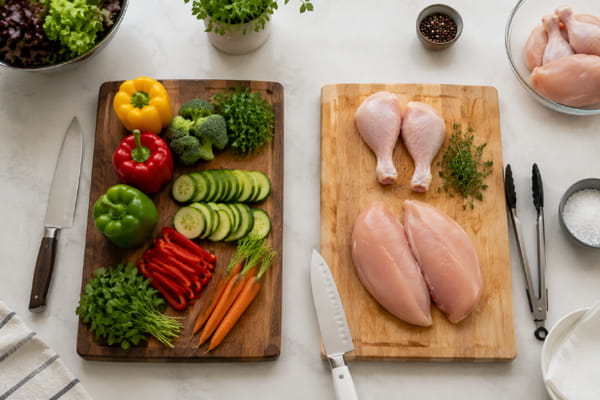
For food safety, process matters more than a “non-toxic” label. USDA recommends separate cutting boards for raw meat, poultry, or seafood and foods such as produce or bread that may be eaten without further cooking. Wash boards with hot, soapy water after use and dry them thoroughly.
Replace any board when deep grooves, cracks, or other damage become difficult to clean. Before using bleach or another sanitizer, follow the manufacturer’s instructions because finishes and construction methods differ.
Avoid glass, stone, or similarly hard boards if preserving knife edges matters; very hard surfaces can be rough on blades.
Common Mistakes to Avoid
Do not buy a board solely because it says “eco,” “natural,” or “non-toxic.” Look for actual materials and care information. Do not soak wooden boards or put them in a dishwasher unless the manufacturer permits it.
Avoid leaving a wet board flat for long periods, and replace boards with structural splits or deeply scarred surfaces.
Frequently Asked Questions
What Is the Safest Cutting Board Material?
No material is automatically safest in every situation. For routine prep, well-maintained hardwood such as maple is practical. Cleaning, drying, separating raw foods, and replacing worn boards are equally important.
Are Wooden Cutting Boards Sanitary?
Yes, they can be used safely when properly cleaned, dried, and maintained. USDA allows consumers to use wood or nonporous cutting boards and emphasizes preventing cross-contamination.
Do Plastic Cutting Boards Shed Microplastics?
Yes. A 2023 peer-reviewed study measured microplastic release from polyethylene and polypropylene boards during chopping. It showed exposure potential but did not establish that normal cutting-board use causes a specific human disease.
Is Bamboo Better Than Plastic?
Bamboo avoids a conventional plastic cutting surface and is lightweight and affordable. Most bamboo boards, however, use bonded strips, so buyers who want zero adhesive should choose single-piece hardwood.
Is Mineral Oil Safe for Cutting Boards?
Food-grade mineral oil is widely used for wood food-preparation surfaces. If you prefer plant-based care, some makers offer clearly identified linseed oil, fractionated coconut oil, or other alternatives.
Should I Use a Separate Cutting Board for Raw Meat?
Yes. USDA recommends a separate board for raw meat, poultry, and seafood to reduce transfer of bacteria to produce, bread, and other ready-to-eat foods.
When Should I Replace a Wooden Cutting Board?
Replace it when cracks, splits, or deep grooves become difficult to clean effectively. Minor surface wear that can be safely sanded is different from structural damage.
Final Verdict
For most home cooks, the John Boos Chop-N-Slice Maple offers a strong balance of hard maple, useful size, price, and straightforward maintenance. If your priority is avoiding glue and minimizing added materials, Treeboard’s single-piece maple and the unfinished Salzmark One are the more transparent choices.
The best non-toxic cutting board is the one whose materials you understand, whose maintenance you will follow, and whose size fits your kitchen. Choose a well-disclosed board, separate raw-food prep, clean it promptly, and replace it when wear makes thorough cleaning difficult.
As an Amazon Associate, I earn from qualifying purchases.