
As an Amazon Associate, I earn from qualifying purchases.
Shopping for kitchen tools sounds easy until you actually start. One search turns into hundreds of pans, gadgets, sets, and “must-have” items. Before long, it becomes hard to tell what you truly need and what is just taking up space.
The truth is simple. A functional kitchen is not built by buying everything at once. It is built by choosing a small group of tools that make daily cooking easier, faster, and less stressful.
This kitchen essentials buying guide is designed for beginners, renters, new homeowners, and everyday cooks who want a smart setup without wasting money. It covers what to buy first, what can wait, and which tools actually earn their place in a real home kitchen.
What Most People Get Wrong About Kitchen Essentials
A lot of first-time shoppers make the same mistake. They buy large matching sets or trendy gadgets before they know what they actually use. That often leads to cluttered drawers, crowded cabinets, and money spent on tools that never leave the box.
The best kitchen setup is not the biggest one. It is the one that fits your routine.
If you mostly cook simple breakfasts, quick dinners, and basic meal prep, you do not need a kitchen packed with specialty tools. You need a few dependable pieces that cover the majority of everyday tasks.
That is why this guide focuses on practical kitchen must haves, not fantasy-shopping kitchen gear.
How to Build a Smarter Kitchen
Before you buy anything, think in terms of function.
A good kitchen should help you do five things well:
- prep ingredients
- cook everyday meals
- measure accurately
- store leftovers
- clean up easily
If a tool does not support one of those jobs, it probably does not belong in your first round of purchases.
The easiest way to shop is to divide your kitchen into four zones:
- prep tools
- cookware
- bake and roast basics
- storage and cleanup
That approach makes buying simpler and helps you avoid random purchases.
Buy First, Buy Later, Skip for Now
To make this guide more useful, let’s sort kitchen tools the way real shoppers need them.
Buy First
These are your true everyday essentials. If you are building a kitchen from scratch, start here.
Buy Later
These are helpful upgrades, but you do not need them immediately.
Skip for Now
These are tools many people buy too early. They may be useful someday, but they are not first-priority items for most kitchens.
The Kitchen Essentials You Should Buy First
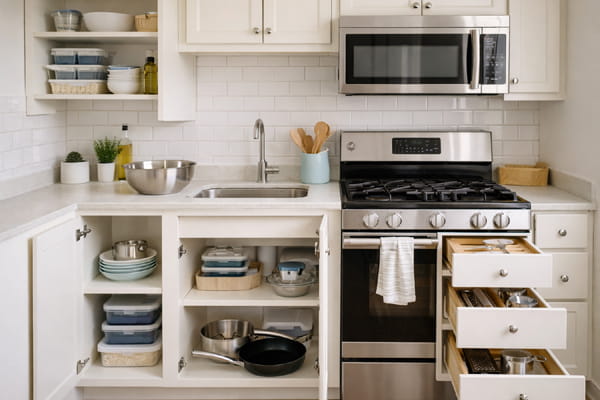
1. A Good Chef’s Knife
If there is one item worth taking seriously, it is your chef’s knife. This is the tool you will reach for over and over again. It handles slicing vegetables, chopping onions, trimming meat, mincing garlic, and most daily prep work.
Many beginners think they need a huge knife set. They usually do not. One solid chef’s knife does more for your kitchen than a dozen mediocre blades.
What to look for:
- around 8 inches long
- comfortable grip
- balanced feel in your hand
- stainless steel or high-carbon stainless steel
- easy to sharpen
What to avoid:
- oversized knife blocks
- blades that feel too heavy or too light
- cheap handles that feel slippery
A better knife makes cooking easier right away. It is one of the few places where spending a little more can make a real difference.
2. A Paring Knife
A chef’s knife covers big jobs. A paring knife handles the small ones. It is useful for peeling fruit, trimming strawberries, slicing small vegetables, and detail work that feels awkward with a full-size knife.
This is one of those basic kitchen items that does not get much attention, but it quietly earns its spot.
Best for:
- fruit prep
- small cutting tasks
- peeling
- precise slicing
3. One Large Cutting Board
A cutting board seems simple, but the right size makes a big difference. Small boards get crowded fast and turn meal prep into a mess. A larger board gives you more room to work and keeps your counter protected.
What to look for:
- sturdy surface
- non-slip grip or stable base
- easy to clean
- enough room for everyday chopping
Wood and quality plastic are both good options. Many home cooks eventually use two boards, one for produce and one for proteins, but one reliable board is enough to start.
4. A Nonstick Skillet
For beginners, a nonstick skillet is one of the most useful cookware pieces you can own. It makes eggs, pancakes, grilled sandwiches, vegetables, and quick meals much easier to cook and clean up after.
A 10-inch or 12-inch skillet works well for most households.
What to look for:
- even heating
- comfortable handle
- oven-safe if possible
- a surface that is easy to clean
This is one of the best kitchen tools for beginners because it removes a lot of frustration from daily cooking.
5. A Medium Saucepan with Lid
A saucepan is a real workhorse. It is useful for rice, pasta, soup, oatmeal, reheating leftovers, boiling eggs, and simmering sauces. In many homes, it gets used almost every day.
A 2- to 3-quart saucepan is usually the sweet spot.
Look for:
- a lid that fits well
- sturdy handle
- even heat distribution
- a size that works for smaller meals and side dishes
6. A Sheet Pan
If your kitchen has a sheet pan, you already have one of the most flexible tools in the room. It works for roasted vegetables, baked chicken, cookies, frozen foods, reheating leftovers, and simple one-pan meals.
For many people, this is one of the most underrated must have kitchen essentials.
Why it matters:
- supports easy oven meals
- helps with meal prep
- works for both cooking and baking
- easy to store compared with bulky specialty pans
Choose a sturdy rimmed pan that will not warp easily.
7. Mixing Bowls
You do not need ten bowls. You do need a few good ones.
Mixing bowls help with prepping ingredients, whisking sauces, marinating proteins, tossing salads, and baking. A nesting set saves space and gives you a better range of sizes.
Best choice for most kitchens:
- a set of 3 bowls
- nesting design
- stainless steel or glass
- lightweight but durable
8. Measuring Cups and Measuring Spoons
Even if you are not a baker, measuring tools help more than people think. They improve consistency and make recipes much easier to follow.
This is especially important for beginners who are still learning portions and ingredient balance.
Look for:
- clear markings
- standard US measurements
- durable construction
- easy storage
9. Tongs, a Spatula, and a Wooden Spoon
If you only stock three utensils at first, make it these.
Tongs are great for flipping, lifting, tossing, and serving. A spatula works for eggs, pancakes, and sautéing. A wooden spoon is ideal for soups, sauces, rice dishes, and skillet cooking.
These three cover a huge part of your daily cooking needs without cluttering your drawers with unnecessary utensils.
10. A Colander
This is one of those essential kitchen tools you may overlook until you need it. Draining pasta without a colander is annoying. Washing produce is harder too.
A good colander should be:
- stable
- roomy enough for pasta or vegetables
- easy to grip
- easy to rinse clean
11. Food Storage Containers
A kitchen that cooks regularly also needs to store food properly. Storage containers help with leftovers, meal prep, chopped ingredients, and packed lunches.
This is where function matters more than style.
What to look for:
- leak-resistant lids
- stackable design
- microwave-safe materials
- durable enough for repeat use
Glass containers cost more, but many people prefer them because they resist stains and last longer.
12. Kitchen Towels and Oven Mitts
They are not glamorous, but they are necessary. Kitchen towels help with drying dishes, wiping counters, grabbing warm handles, and staying organized while you cook. Oven mitts protect your hands when moving hot trays and pans.
These are true kitchen must haves, especially once you start using the oven more often.
Kitchen Tools That Are Worth Buying Later
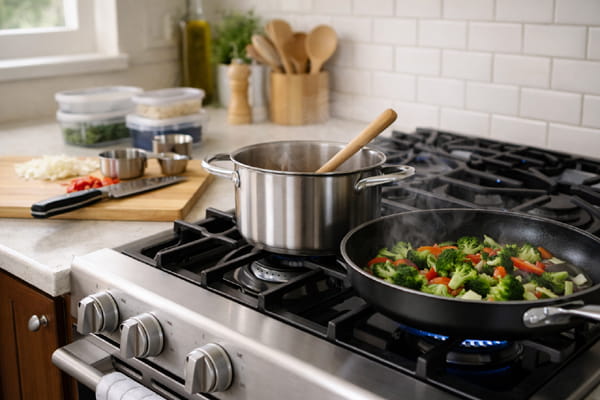
Once your basics are covered, these are smart second-stage upgrades.
1. Stainless Steel Skillet
A stainless steel skillet is great for browning, searing, and building more flavor. It is not always as beginner-friendly as nonstick, but it is a strong upgrade once you get more comfortable cooking.
2. Stock Pot or Dutch Oven
If you cook soups, stews, pasta for a family, or batch meals, a larger pot becomes very useful. But if you mostly cook for one or two people, you may not need it immediately.
3. Baking Dish
A baking dish is handy for casseroles, baked pasta, desserts, and roasting. Good to have, but not urgent for every kitchen.
4. Blender or Food Processor
These can be very useful, especially if you make smoothies, sauces, soups, or prep lots of chopped ingredients. Still, they take up space, so they are better as later additions unless you already know you will use them often.
What to Skip for Now
One of the easiest ways to save money is to avoid buying too much too early.
Here are the items many people can skip at first:
- oversized cookware sets
- large knife block sets
- specialty egg tools
- avocado slicers
- garlic gadgets
- banana hangers
- single-use choppers
- novelty baking pieces
- extra serving tools you will rarely touch
A lot of these products are marketed as helpful, but they do not improve daily cooking nearly as much as better basics do.
The 80/20 Kitchen Setup That Works for Most Homes
If you want the simplest way to think about your kitchen, use the 80/20 rule.
About 20 percent of your tools will handle 80 percent of your cooking.
For most people, that small core looks like this:
- chef’s knife
- paring knife
- cutting board
- nonstick skillet
- saucepan
- sheet pan
- mixing bowls
- measuring tools
- tongs
- spatula
- wooden spoon
- colander
- food storage containers
That setup is enough for breakfast, lunch prep, pasta night, roasted dinners, simple baking, leftovers, and everyday home cooking.
That is why a strong kitchen utensils list should not be long just for the sake of looking complete. It should be realistic.
Best Kitchen Essentials by Lifestyle
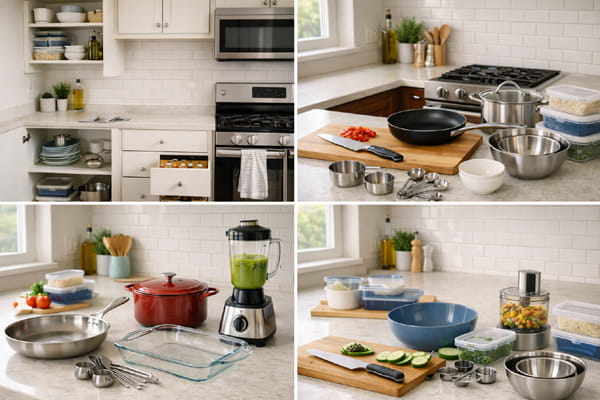
For First Apartments
If you are setting up your first apartment, focus on flexible tools that do more than one job. Storage is often limited, so compact, stackable, and easy-to-clean items matter more.
Best first apartment kitchen essentials:
- nonstick skillet
- saucepan
- sheet pan
- chef’s knife
- cutting board
- storage containers
- measuring tools
- mixing bowls
For Small Kitchens
Small kitchens benefit from space-saving choices. Avoid large sets and bulky appliances unless you use them often.
What works best:
- nesting bowls
- stackable containers
- one multi-use skillet
- one saucepan
- one sheet pan
- fewer, better utensils
For Beginner Cooks
If you are new to cooking, prioritize tools that reduce friction. A good nonstick skillet, sharp knife, and simple utensils will make it much easier to stick with cooking at home.
For Budget Shoppers
The smartest move is not to buy the cheapest version of everything. It is to buy fewer things, but choose decent quality for the items you will use constantly.
Affordable kitchen essentials should still feel sturdy, safe, and easy to clean.
What Is Worth Spending More On
Some tools deserve a bigger share of your budget because you will use them constantly.
Spend More On:
Chef’s Knife
A good knife changes the cooking experience in a way cheap knives usually do not.
Skillet
A better skillet often heats more evenly, lasts longer, and performs better.
Saucepan
A strong saucepan makes everyday cooking easier and more reliable.
Storage Containers
Good containers reduce waste, stack better, and hold up longer.
What Is Fine to Buy on a Budget
Not every item needs a premium price tag.
Budget-Friendly Buys:
- measuring cups
- measuring spoons
- wooden spoons
- kitchen towels
- colander
- mixing bowls
- basic spatula
The trick is knowing where quality matters most and where it matters less.
Common Buying Mistakes to Avoid
Buying a Full Set Before Knowing Your Needs
A big set may sound efficient, but it usually includes items you do not use much.
Choosing Aesthetic Over Comfort
A pan can look beautiful and still feel awkward in daily use.
Ignoring Kitchen Size
Tools should fit your shelves, cabinets, and counters, not just your wishlist.
Buying Too Many Single-Purpose Tools
These add clutter fast and often do not get much use.
Going Too Cheap on High-Use Items
Low-quality knives and cookware often create more frustration than savings.
Final Thoughts
A better kitchen does not begin with more products. It begins with better choices.
The most useful kitchen essentials are not the trendiest ones or the biggest sets. They are the tools that help you prep, cook, store, and clean up with less hassle. If you start with the basics, buy according to your actual habits, and add slowly over time, you will end up with a kitchen that feels practical instead of crowded.
For most people, the smartest kitchen is not the one with the most gear. It is the one that works well every single day.
Short Excerpt
This kitchen essentials buying guide breaks down what to buy first, what can wait, and which tools are truly worth your money. Perfect for beginners, renters, and anyone setting up a practical home kitchen.
FAQ Section
What are the most important kitchen essentials to buy first?
The most important kitchen essentials to buy first are a chef’s knife, cutting board, nonstick skillet, saucepan, sheet pan, mixing bowls, measuring cups, measuring spoons, tongs, spatula, colander, and food storage containers.
What kitchen tools do beginners really need?
Beginners usually need simple, versatile tools that support everyday cooking, including one good knife, one skillet, one saucepan, measuring tools, a cutting board, and a few basic utensils.
How do I build a kitchen on a budget?
Build a kitchen on a budget by starting with a small set of essentials, skipping oversized sets, and spending a little more only on tools you will use most often, like a knife or skillet.
What should I skip when setting up a first kitchen?
When setting up a first kitchen, you can usually skip large cookware sets, novelty gadgets, specialty slicers, and bulky appliances you are not sure you will use.
As an Amazon Associate, I earn from qualifying purchases.