
As an Amazon Associate, I earn from qualifying purchases.
A small kitchen shouldn’t stop you from enjoying homemade cookies, cakes, fresh bread, or weekend baking projects. The challenge is finding an appliance that offers useful mixing performance without taking over your countertop.
If you’re searching for the best compact stand mixer for small kitchen spaces, the KitchenAid Artisan Mini 3.5-Quart is an excellent starting point. Its relatively narrow design, versatile mixing functions, and established accessory system make it especially appealing for regular home bakers.
However, not everyone needs a premium mixer. Affordable options such as the Hamilton Beach 4-Quart and Dash Everyday models may suit occasional bakers, while larger alternatives can make sense if bowl capacity matters more than storage space.
This guide compares seven stand mixers and space-conscious alternatives, explaining their advantages, limitations, and ideal uses.
Editorial note: These recommendations are based on manufacturer specifications and published independent product evaluations. Sweet-crush has not personally tested these mixers. Product availability, accessories, and specifications should be confirmed before purchase.
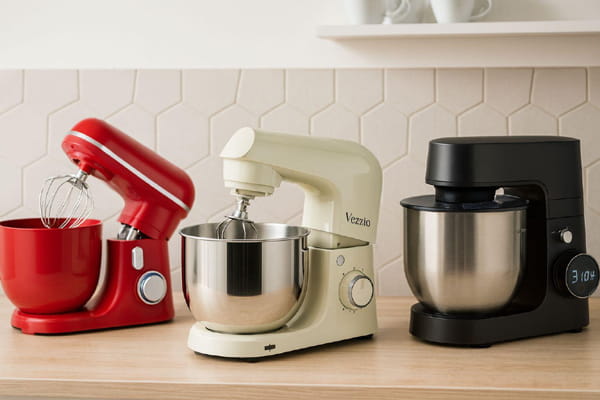
Best Compact Stand Mixers for Small Kitchens at a Glance
The right mixer depends on your available space, baking frequency, and preferred recipes.
| Stand Mixer | Bowl Capacity | Best For |
|---|---|---|
| KitchenAid Artisan Mini | 3.5 quarts | Best overall compact option |
| Hamilton Beach 7-Speed | 4 quarts | Budget-conscious everyday baking |
| Dash Everyday | 3 quarts | Occasional light-duty mixing |
| Kitchen in the Box Mini | 3.2 quarts | Small apartments and easy storage |
| Bosch Compact MUM4405 | 4 quarts | Compact multifunctional design; older model |
| KitchenAid Classic | 4.5 quarts | Regular baking with more capacity |
| Cuisinart Precision Master SM-50NAS | 5.5 quarts | Bigger batches with a relatively narrow body |
Quick recommendation: Choose the KitchenAid Artisan Mini if countertop space is your main concern and you bake regularly. Consider the Hamilton Beach 4-Quart if affordability matters more. If you only bake occasionally, a smaller entry-level mixer—or even a hand mixer—may be sufficient.
Remember that bowl capacity doesn’t tell the whole story. A larger bowl can fit into a relatively narrow appliance, while a lightweight mixer may need more stability when handling dense dough.
7 Compact Stand Mixers Worth Considering
1. KitchenAid Artisan Mini 3.5-Quart — Best Overall
The KitchenAid Artisan Mini is one of the most recognizable compact stand mixers available to American home bakers.
Its 3.5-quart stainless steel bowl provides a practical capacity for everyday cakes, cookies, and other small-batch recipes. The tilt-head construction makes it convenient to change attachments and access ingredients.
KitchenAid specifies a compact body approximately 12.3 inches tall. The mixer also supports compatible power-hub attachments, which can expand its usefulness beyond traditional baking.
Independent evaluations have highlighted its small-batch performance and relatively compact footprint. Still, it occupies meaningful counter space and weighs considerably more than some budget mini mixers.
Key advantages
- Compact design suitable for smaller countertops
- Ten mixing speeds
- Stainless steel bowl
- Compatible accessory ecosystem
- Useful for regular small-batch baking
Potential disadvantages
- Higher purchase price than many entry-level alternatives
- Heavier than some lightweight mini mixers
- Smaller bowl than standard 4.5- or 5-quart machines
- Requires additional clearance when raising the head
Best for: Apartment dwellers and enthusiastic home bakers who want a capable mixer without moving up to a full-size model.
Verdict: A strong all-around choice when compact dimensions, versatility, and routine baking performance are more important than maximum batch size.
2. Hamilton Beach 7-Speed 4-Quart — Best Budget-Friendly Choice
The Hamilton Beach 7-Speed Stand Mixer offers an appealing middle ground between very small entry-level mixers and more expensive appliances.
Its 4-quart stainless steel mixing bowl provides additional capacity without moving into oversized commercial-style equipment. The manufacturer lists seven speed settings and a 300-watt motor.
The mixer uses planetary mixing action, in which the attachment moves around the bowl while rotating. This helps bring ingredients together across the mixing area.
It includes a flat beater, dough hook, wire whisk, and splash guard, although included accessories should always be checked against the exact model listing.
Key advantages
- Practical 4-quart bowl
- Seven mixing speeds
- Planetary mixing action
- Useful everyday attachments
- Accessible alternative to premium mixers
Potential disadvantages
- Takes more room than the smallest mini mixers
- Less flexibility in speed adjustment than some ten-speed models
- Not the first choice for frequent, large batches of stiff dough
Best for: New home bakers who want a reasonably priced stand mixer for cookies, frosting, cake batter, and occasional dough preparation.
Verdict: One of the more sensible configurations to consider when balancing capacity, convenience, and budget.
3. Dash Everyday 3-Quart — Best for Occasional Baking
The Dash Everyday Stand Mixer focuses on simplicity and lightweight convenience.
Its 3-quart bowl and six-speed design are attractive for smaller households that occasionally make frosting, cake batter, whipped cream, or similar mixtures.
A major benefit is its relatively manageable size. For people who don’t want a heavy appliance permanently displayed on the counter, this style may be easier to put away between baking sessions.
However, an inexpensive lightweight stand mixer shouldn’t automatically be treated as a replacement for a heavy-duty bread mixer.
The mixing mechanism and included attachments may differ from those of more advanced planetary stand mixers, so it is important to understand the particular model’s limitations.
Key advantages
- Small bowl suitable for modest recipes
- Lightweight construction
- Straightforward speed controls
- Convenient for occasional use
- Less intimidating for beginners
Potential disadvantages
- Limited capacity
- Less suitable for demanding bread-dough preparation
- Not as versatile as larger planetary mixers
- Some mixtures may require additional manual scraping
Best for: Students, occasional bakers, and small households preparing simple desserts.
Verdict: Consider this mixer when convenience and compact storage matter more than demanding mixing performance.
4. Kitchen in the Box 3.2-Quart Mini — Best for Limited Storage
For a small apartment kitchen, a mixer that can be moved easily into a cabinet may be more useful than a larger appliance that must remain on the counter.
The Kitchen in the Box 3.2-Quart is designed around this compact-storage approach.
Its small stainless steel bowl and miniature body make it worth examining for baking in limited spaces. Product listings commonly describe a six-speed configuration, but verify the exact specification before ordering because models and packages vary.
This type of mixer can be practical for light-to-moderate home baking, especially when preparing smaller quantities.
However, compact and lightweight designs can introduce trade-offs. Stability, bowl coverage, motor durability, and the ability to handle dense mixtures deserve particular attention.
Key advantages
- Small 3.2-quart capacity
- Compact design
- Convenient storage potential
- Suitable for modest baking quantities
- Alternative to heavier countertop appliances
Potential disadvantages
- Limited room for large recipes
- Performance may vary with dough consistency
- Requires careful consideration of long-term support and replacement parts
Best for: Apartment residents with very limited storage who bake relatively small quantities.
Verdict: An option worth comparing if physical size is your overriding concern, provided its current model specifications and warranty meet your needs.
5. Bosch Compact MUM4405 — Best Older Compact Multipurpose Design
The Bosch Compact MUM4405 is an interesting example of how appliance design can prioritize versatility without relying on a traditional large stand-mixer body.
Bosch documentation identifies the MUM4405 as a 400-watt compact kitchen machine with a 4-quart bowl, mixing attachments, and integrated cord storage.
Its design differs from the familiar KitchenAid-style stand mixer, potentially appealing to cooks interested in a multipurpose appliance.
There is an important buying consideration: the MUM4405 is an older model. New US availability, warranty coverage, replacement parts, and compatible accessories should be checked carefully.
Key advantages
- 4-quart bowl
- 400-watt rated motor
- Compact kitchen-machine concept
- Integrated cord storage
- Distinctive attachment-based design
Potential disadvantages
- Older model with uncertain new-stock availability
- Replacement parts may require additional research
- Less straightforward to purchase than widely stocked current models
Best for: Buyers researching refurbished or existing Bosch Compact systems, or those specifically interested in the MUM-style design.
Verdict: An interesting compact alternative, but not the easiest recommendation for someone seeking a readily available new mixer with uncomplicated US support.
6. KitchenAid Classic 4.5-Quart — Best Step-Up for Regular Bakers
Not every small kitchen requires the smallest possible mixer.
If you have sufficient countertop depth and overhead clearance, the KitchenAid Classic 4.5-Quart can offer a useful increase in capacity over mini models.
This tilt-head mixer includes ten speeds and a 4.5-quart bowl. Its design is particularly appealing to bakers who regularly prepare cookies, cake batter, and other recipes in family-size quantities.
The larger bowl helps reduce the need to split some recipes into separate batches. However, the appliance is noticeably less compact than the Artisan Mini.
It’s important to measure your available space rather than assuming that a slightly larger bowl means only a small difference in the overall appliance.
Key advantages
- 4.5-quart bowl
- Ten speeds
- Established KitchenAid attachment ecosystem
- Familiar tilt-head operation
- Greater batch flexibility than 3-quart mixers
Potential disadvantages
- Larger physical footprint
- Heavier to move and store
- Potentially unnecessary for people who bake only occasionally
Best for: Regular bakers with small-to-medium kitchens who have enough permanent counter space for a standard-size mixer.
Verdict: A worthwhile alternative when baking capacity matters more than achieving the smallest possible footprint.
7. Cuisinart Precision Master 5.5-Quart — Best for Larger Batches
The Cuisinart Precision Master SM-50NAS provides substantially more bowl capacity than the other mixers in this guide.
According to Cuisinart, the model has a 5.5-quart stainless steel bowl, a 500-watt motor, 12 speeds, and a tilt-back head. Its listed dimensions are approximately 14.17 inches long, 7.87 inches wide, and 14.13 inches high.
That makes it interesting for shoppers who have a narrow area available but still want a larger mixing bowl.
The trade-off is that its overall depth, height, and weight may make it unsuitable for particularly crowded counters.
Key advantages
- Large 5.5-quart bowl
- Twelve speed settings
- Included dough hook, whisk, and mixing paddle
- Optional attachment ecosystem
- Relatively narrow stated body width
Potential disadvantages
- Not a true mini stand mixer
- Requires more usable space than compact models
- Large bowl may be less convenient for tiny batches
- Heavier appliance to move between storage and countertop
Best for: Home bakers who have limited counter width but regularly prepare larger recipes.
Verdict: A capacity-focused alternative rather than a genuinely miniature mixer. Check the exact model and regional availability before buying.
How to Choose the Best Compact Stand Mixer for a Small Kitchen
Choosing a compact stand mixer involves more than comparing bowl size or advertised motor power.
Measure Your Countertop First
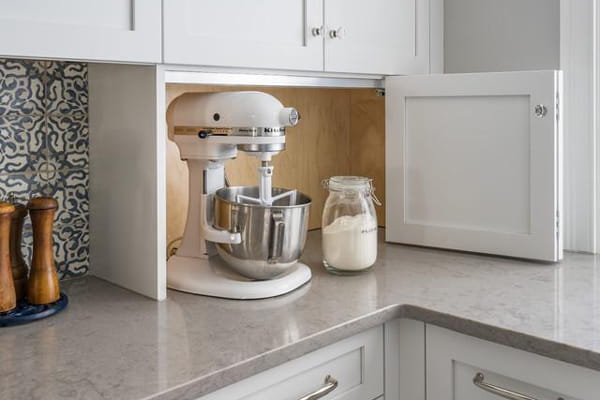
Before shopping, measure the width, depth, and height of the space where the mixer will sit.
Also account for the room required to raise the mixing head, remove the bowl, and insert attachments.
A stand mixer that technically fits beneath an upper cabinet may still be inconvenient to use if the head cannot open fully.
If you plan to store the machine after each use, check the dimensions of your storage cabinet and whether its weight is manageable.
Choose the Right Bowl Capacity
For many smaller households, a bowl between 3 and 4 quarts can be a sensible starting point.
A 3-quart mixer may be convenient for frosting, cake batter, and modest cookie recipes. A 3.5- or 4-quart machine offers slightly more flexibility for everyday baking.
However, usable recipe capacity depends on the ingredients and manufacturer limits, not simply the bowl’s liquid volume.
Dense bread dough places different demands on a mixer than whipped cream.
Understand Mixing Action
Planetary mixers rotate an attachment while moving it around the bowl, helping reach ingredients across the mixing area.
Other stand mixers may use rotating bowls or different mixing mechanisms.
Neither approach should be judged by motor wattage alone. Mixing geometry, drivetrain construction, stability, and the specific task all influence performance.
Check the Attachments
The most useful basic accessories are:
- Flat beater: Cookie dough, cake batter, and buttercream
- Wire whisk: Egg whites, whipped cream, and aerated mixtures
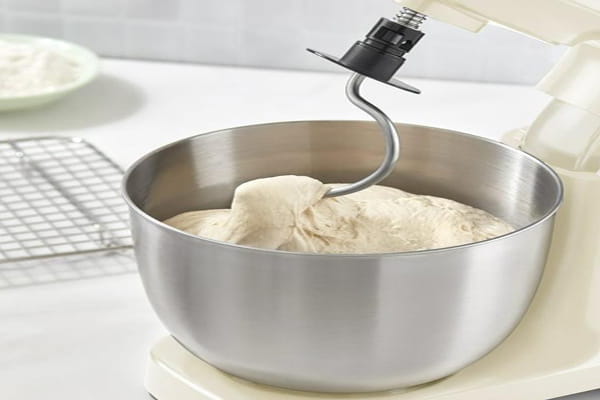
- Dough hook: Kneading dough within the manufacturer’s stated limits
A splash guard can also make ingredient addition less messy.
Check whether accessories are included, available separately, or dishwasher-safe. Instructions may differ between components of the same mixer.
Think About Weight and Stability
A lightweight appliance can be easier to store, but it may move more during demanding mixing tasks.
Heavier appliances can offer greater stability, although weight by itself does not prove superior performance.
For frequent bread baking, check manufacturer dough-capacity guidance and independent assessments before deciding.
What Size Stand Mixer Do You Really Need?
There is no universal bowl size that works for everyone.
| Your Baking Habits | Size Worth Considering |
|---|---|
| Occasional frosting and small desserts | Around 3 quarts |
| Cookies and cakes for one or two people | 3–3.5 quarts |
| Regular everyday home baking | 3.5–4.5 quarts |
| Larger family batches | 4.5–5.5 quarts |
| Frequent large bread batches | Consider specialized or larger-capacity machines |
These ranges are shopping guidelines, not guaranteed recipe capacities.
For a household of one or two people, the KitchenAid Artisan Mini or a suitable smaller mixer may provide enough flexibility. If you routinely double recipes, a larger bowl could save preparation time.
When bread is your primary reason for buying a mixer, prioritize demonstrated kneading ability and manufacturer limits over bowl volume alone.
Compact Stand Mixer vs. Hand Mixer: Which Is Better?
A stand mixer is convenient because it can mix while your hands are free for other preparation tasks.
It also offers a stable bowl-and-attachment system that can be useful for repeated baking.
A hand mixer, on the other hand, is less expensive in many cases, requires very little storage space, and is often sufficient for simple cake batters, whipped cream, and frosting.
Choose a compact stand mixer when you bake regularly, want hands-free mixing, or need more functionality than a hand mixer provides.
Choose a hand mixer when space is extremely limited, your recipes are simple, or baking is an occasional activity.
You don’t need to buy a stand mixer simply because you enjoy baking. The best appliance is the one that matches how you actually cook.
Common Mistakes to Avoid When Buying a Small Stand Mixer
Buying based on wattage alone: A high advertised wattage doesn’t automatically mean better mixing or stronger dough performance.
Ignoring cabinet clearance: Always measure the space needed to raise the mixer head.
Choosing an oversized bowl: A very large mixer may be inconvenient for small batches.
Assuming every mixer handles bread equally: Frequent stiff-dough kneading can exceed the capabilities of lightweight appliances.
Overlooking storage weight: A machine that is inconvenient to move may remain unused.
Ignoring replacement parts: Consider whether bowls, beaters, hooks, and other accessories can be purchased when needed.
Confusing bowl size with machine size: Two mixers with similar capacities can have very different physical dimensions.
How to Keep a Compact Stand Mixer in Good Condition
Regular maintenance helps keep your mixer clean and ready for baking.
- Unplug the appliance before cleaning or changing attachments.
- Remove the mixing bowl and attachments according to the manual.
- Wash removable components using the manufacturer’s instructions.
- Wipe the mixer body with a slightly damp cloth rather than immersing it in water.
- Dry accessories completely before storage.
- Avoid exceeding the recommended dough capacity or mixing duration.
- Keep the appliance on a stable, level surface during operation.
For tight kitchens, consider storing smaller accessories inside the clean, dry mixing bowl when the manufacturer allows it. This can help prevent misplaced attachments.
Never reach into the bowl while the mixer is running, and stop the machine before scraping ingredients from the sides.
Frequently Asked Questions
What is the best compact stand mixer for a small kitchen?
The KitchenAid Artisan Mini 3.5-Quart is a strong all-around option for small kitchens because of its compact footprint, versatile mixing functions, and established accessory system. However, budget and baking habits may make another model more appropriate.
Is a 3.5-quart stand mixer big enough?
A 3.5-quart stand mixer can be sufficient for many everyday cakes, cookies, and smaller baking batches. Larger households or people who frequently double recipes may benefit from a 4.5- or 5-quart model.
Can a mini stand mixer knead bread dough?
Some compact mixers can knead bread dough, but capacity and dough consistency matter. Always follow the manufacturer’s recommended kneading speed, dough quantity, and operating limits.
What is the difference between a compact stand mixer and a regular stand mixer?
Compact models generally prioritize smaller dimensions, lower weight, or reduced bowl capacity. Regular models often provide larger bowls and more batch flexibility, although their physical size and weight are usually greater.
Are lightweight stand mixers worth buying?
They can be a practical choice for occasional baking and limited storage spaces. However, shoppers should consider stability, mixing mechanism, durability, and dough-handling limitations before purchasing.
What size stand mixer is best for a two-person household?
A 3- to 3.5-quart mixer is a reasonable starting point for many two-person households. Someone who regularly makes bread or prepares larger batches may prefer a larger model.
Can I store a stand mixer under kitchen cabinets?
Yes, provided the mixer fits and there is enough room to access the bowl and attachments. Tilt-head models may need additional space above the appliance during use.
Is a compact stand mixer better than a hand mixer?
A compact stand mixer is often more convenient for regular hands-free mixing, while a hand mixer is generally easier to store and suitable for simpler recipes. Neither is automatically the better option for every household.
Final Verdict: Which Compact Stand Mixer Should You Buy?
The best compact stand mixer for small kitchen spaces is one that fits your countertop, handles your favorite recipes, and remains convenient enough to use regularly.
The KitchenAid Artisan Mini 3.5-Quart stands out as the strongest overall starting point for dedicated home bakers with limited space.
The Hamilton Beach 4-Quart is worth comparing for everyday value, while the Dash Everyday and Kitchen in the Box Mini may appeal to occasional bakers prioritizing small size and simple storage.
For more substantial baking, the KitchenAid Classic and Cuisinart Precision Master offer larger-capacity alternatives, although neither is as compact as a true mini mixer.
Before purchasing, measure your kitchen, evaluate your normal recipe quantities, and confirm the current model’s warranty and accessories.
As an Amazon Associate, I earn from qualifying purchases.