
As an Amazon Associate, I earn from qualifying purchases.
Kitchen Gadgets You’ll Actually Use Every Day: Smart Picks for Modern Home Kitchens
Most kitchen gadgets look useful when you first see them online. The photos are clean, the demonstrations are impressive, and the promises sound great. Then the package arrives, you use it once, and it ends up in the back of a drawer taking up space.
That is the problem with a lot of trendy kitchen tools. They look exciting, but they do not really make daily cooking easier.
The best kitchen gadgets are different. They save time when you are rushing to make dinner after work. They help with meal prep when you are cooking for a family. They make small tasks faster, less messy, and less annoying. Most importantly, they earn their place in your kitchen because you keep reaching for them again and again.
Whether you are setting up your first kitchen, cooking in a small apartment, shopping for useful gifts, or simply trying to make everyday meals easier, the right tools can make a real difference. You do not need a huge collection of gadgets. You just need the ones that match the way you actually cook.
This guide covers kitchen gadgets that are genuinely worth buying, what makes them useful, and how to avoid wasting money on tools that look clever but do not help much in real life.
What Makes a Kitchen Gadget Worth Buying?
Not every kitchen tool deserves counter space or drawer space. Before buying anything, it helps to think beyond marketing and ask a few simple questions.
Does it save time?
A good gadget should make an everyday task faster. If it turns a five-minute job into a ten-minute cleanup project, it is probably not worth it.
Is it easy to clean?
This matters more than people expect. Many tools seem useful until you realize they have too many parts, awkward corners, or blades that are annoying to wash. If a gadget is hard to clean, you will stop using it.
Will you actually use it every week?
The most useful kitchen tools are not always the flashiest ones. They are the ones that fit your normal routine. A gadget that works for your real cooking habits is always better than one that only looks good in a social media video.
Is it durable?
A cheap gadget that breaks quickly is never a bargain. Good kitchen tools should feel solid, easy to handle, and built for repeated use.
If a product checks those boxes, it has a much better chance of becoming something you actually use instead of something you regret buying.
Best Kitchen Gadgets for Everyday Cooking
These are not novelty tools. These are practical, time-saving kitchen gadgets that can genuinely make cooking easier in a modern home.
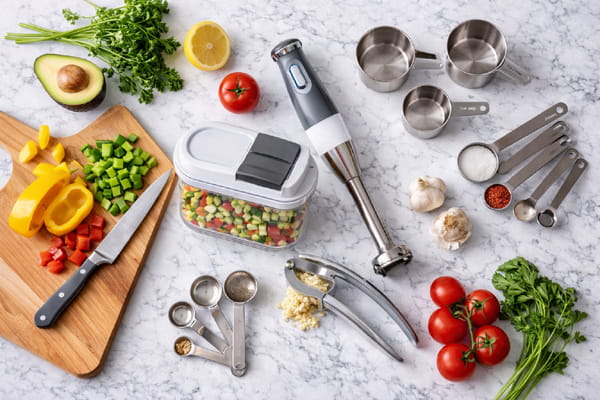
1. Vegetable Chopper
If you cook with fresh ingredients often, a vegetable chopper can save a surprising amount of time. Chopping onions, peppers, cucumbers, tomatoes, or carrots by hand is not difficult, but it does take time, especially when you are making larger meals or prepping several ingredients at once.
A good vegetable chopper helps speed up prep work and can also make cutting more consistent. That is especially useful for beginners, busy parents, and people who do not love using knives for everything.
Why it is worth buying:
-
- It cuts prep time during busy weeknights
-
- It is useful for salads, soups, stir-fries, and meal prep
-
- It can be easier and safer for people with limited knife skills
Who will use it most:
Home cooks, apartment dwellers, beginners, and anyone who cooks with vegetables several times a week
Who may want to skip it:
If you already have strong knife skills and prefer manual prep, you may not need one
What to look for:
Choose one with sharp blades, a sturdy container, and parts that are easy to rinse or dishwasher-safe. Flimsy models tend to disappoint.
2. Air Fryer
Few kitchen appliances have become as popular in American homes as the air fryer, and for good reason. It is one of the most useful cooking gadgets for people who want crispy food with less oil and less waiting.
Air fryers are great for reheating leftovers, roasting vegetables, cooking frozen snacks, crisping chicken, and making fast lunches or weeknight dinners. For many households, it becomes one of the most-used appliances in the kitchen.
Why it is worth buying:
-
- It cooks many foods faster than a traditional oven
-
- It is convenient for quick meals and leftovers
-
- It helps create crispy texture without deep frying
Who will use it most:
Busy families, singles, couples, and anyone who wants faster meals with less cleanup
Who may want to skip it:
If you already own several countertop appliances and rarely cook convenience foods, it may overlap with tools you already use
What to look for:
Pay attention to basket size, ease of cleaning, controls, and whether it fits your kitchen space. A model that is too small becomes frustrating quickly.
3. Hand Blender
A hand blender, also called an immersion blender, is one of the most underrated kitchen tools. It is compact, easy to store, and incredibly useful for soups, sauces, dressings, purees, and smoothies.
The biggest advantage is convenience. Instead of transferring hot soup into a full-size blender, you can blend it directly in the pot. That means fewer dishes and less mess.
Why it is worth buying:
-
- It blends directly in bowls, pots, and containers
-
- It saves storage space compared to a countertop blender
-
- It works well for quick blending jobs
Who will use it most:
People who make soups, baby food, sauces, protein shakes, or simple homemade dressings
Who may want to skip it:
If you already have a powerful blender and rarely make blended foods, it may not be essential
What to look for:
Look for a comfortable grip, enough power for your needs, and detachable parts that are easy to wash.
4. Digital Kitchen Scale
A digital kitchen scale may not seem exciting, but it is one of the smartest tools you can buy. It is especially helpful for baking, meal prep, portioning ingredients, and reducing guesswork in recipes.
A scale makes cooking more consistent, and that matters more than many people realize. Measuring by volume can be imprecise, especially when it comes to flour, rice, oats, meat, or nuts. A digital scale gives you better control.
Why it is worth buying:
-
- It improves accuracy in baking
-
- It helps with portion control and meal prep
-
- It reduces guesswork and recipe inconsistency
Who will use it most:
Bakers, fitness-focused cooks, home chefs, and anyone trying to cook more consistently
Who may want to skip it:
If you rarely cook from recipes and do not bake, you may use it less often
What to look for:
Choose a model with a clear display, easy unit conversion, a tare function, and a surface that wipes clean easily.
5. Food Processor
A food processor is one of the best kitchen gadgets for people who cook often and want to cut down on repetitive prep work. It can chop, shred, slice, puree, and sometimes knead dough depending on the model.
This is the kind of tool that becomes especially useful when you are cooking for a family, prepping ingredients in batches, or making dishes that involve a lot of slicing and chopping.
Why it is worth buying:
-
- It handles large prep jobs quickly
-
- It is useful for sauces, shredded cheese, chopped vegetables, and more
-
- It can save serious time for regular cooks
Who will use it most:
Frequent home cooks, families, and people who batch-cook or meal prep
Who may want to skip it:
If you have a very small kitchen or only cook simple meals occasionally, it may feel too large for your needs
What to look for:
Think about bowl size, blade options, motor power, and storage. A food processor is useful, but only if it fits your kitchen and your routine.
6. Garlic Press
A garlic press is small, simple, and surprisingly helpful if you cook savory meals often. Mincing garlic by hand is not hard, but it can be messy, sticky, and repetitive, especially if you cook frequently.
A good garlic press makes the job fast and consistent. For some people, it is a small luxury. For others, it becomes an everyday tool.
Why it is worth buying:
-
- It speeds up meal prep
-
- It is convenient for daily cooking
-
- It keeps garlic from sticking all over your hands and knife
Who will use it most:
People who cook pasta, stir-fries, sauces, roasted vegetables, soups, or meat dishes regularly
Who may want to skip it:
If you prefer chopping garlic by hand or rarely cook with fresh garlic, it may not be necessary
What to look for:
Look for a sturdy model that is easy to press and easy to rinse. Hard-to-clean versions are rarely worth it.
7. Measuring Cups and Spoons
Not every useful kitchen essential needs to be high-tech. A solid set of measuring cups and spoons is one of the most basic but important tools in any kitchen.
For beginners especially, they make a big difference. They help with baking, cooking, and following recipes correctly. Even experienced cooks rely on them more than they think.
Why it is worth buying:
-
- It helps recipes turn out more reliably
-
- It is essential for baking and useful for everyday cooking
-
- It is affordable and easy to store
Who will use it most:
Beginners, newlyweds, students, and anyone building a kitchen from scratch
Who may want to skip it:
Almost no one. This is one of the few kitchen tools that nearly every home should have.
What to look for:
Choose a durable set with clear markings that will not fade over time. Metal sets usually last longer than flimsy plastic ones.
8. Salad Spinner
A salad spinner is one of those tools people often ignore until they use a good one. If you buy leafy greens, herbs, or lettuce regularly, it can make prep much easier.
Washing greens is simple, but drying them properly is the real issue. Wet greens do not hold dressing well, and they can make salads taste watered down. A salad spinner solves that problem quickly.
Why it is worth buying:
-
- It dries greens fast and well
-
- It helps salads taste fresher
-
- It can also be used to rinse herbs and some vegetables
Who will use it most:
People who make salads often, buy fresh produce regularly, or prep ingredients ahead of time
Who may want to skip it:
If salads are not a regular part of your routine, it may not earn enough use
What to look for:
Choose one with a stable base, simple spinning mechanism, and a bowl that is easy to clean.
9. Electric Kettle
An electric kettle is not just for tea drinkers. It is one of the fastest and most practical kitchen appliances for boiling water, and it can be useful every single day.
It is great for coffee, tea, instant oatmeal, ramen, French press brewing, and speeding up recipes that start with boiling water. In many kitchens, it is used far more often than expected.
Why it is worth buying:
-
- It boils water quickly
-
- It is convenient for drinks and quick meals
-
- It can be more efficient than heating water on the stove
Who will use it most:
Tea drinkers, coffee drinkers, students, and people who want faster breakfasts or simple meals
Who may want to skip it:
If you almost never boil water separately, it may not be essential
What to look for:
Look for automatic shutoff, comfortable pouring, and enough capacity for your household.
How to Choose the Right Kitchen Gadgets for Your Home
The best kitchen gadgets depend on your space, budget, and cooking habits. A product that feels essential in one home may be unnecessary in another.
Start by thinking about your weekly routine. Do you cook almost every night, or only a few times a week? Do you make quick weeknight dinners, meal prep on weekends, or bake often? Do you have a full kitchen, or are you working with limited countertop space in a small apartment?
Those answers matter more than trends.
A smart approach is to start with tools that solve your most common frustrations. If chopping vegetables slows you down, a vegetable chopper may be useful. If you bake often, a scale is a better investment. If you rely on quick meals, an air fryer may earn its place quickly.
In other words, buy for the way you actually cook, not for the kitchen you imagine having someday.
Common Mistakes People Make When Buying Kitchen Gadgets
One of the most common mistakes is buying too many things at once. It is easy to assume a fully stocked kitchen will make cooking easier, but too many tools can create clutter, not convenience.
Another mistake is focusing too much on appearance. A sleek gadget is nice, but function matters more. If something is awkward to clean, uncomfortable to use, or difficult to store, you will not keep using it.
People also underestimate size. This is especially true in smaller homes and apartment kitchens. Always check dimensions before buying larger tools like air fryers or food processors.
And finally, many shoppers fall for trends. A product can be popular online and still be a bad fit for your cooking routine. The best kitchen gadgets are the ones that solve real daily problems.
Are Expensive Kitchen Gadgets Always Better?
Not at all.
Some budget-friendly kitchen tools work beautifully, while some expensive ones offer features most people never need. A higher price can sometimes mean better materials or a stronger motor, but it does not automatically mean the product is better for your kitchen.
For most households, the sweet spot is somewhere in the middle. Look for quality, ease of use, and practical value. A moderately priced gadget that you use three times a week is usually a much smarter purchase than an expensive one that mostly sits untouched.
Final Thoughts
The best kitchen gadgets are not the ones with the flashiest packaging or the most dramatic before-and-after videos. They are the ones that make real cooking easier. They save time, reduce hassle, and fit naturally into your everyday routine.
You do not need a drawer full of trendy tools to cook well at home. A few reliable, useful gadgets can make a much bigger difference than a long list of products you barely touch.
If you are building a practical kitchen, start simple. Focus on tools that match the meals you already make, the space you actually have, and the kind of help you really need. That is how you end up with a kitchen that works better, feels less stressful, and supports everyday cooking instead of complicating it.
FAQs
What are the most useful kitchen gadgets for beginners?
For beginners, the best starting points are measuring cups and spoons, a vegetable chopper, a digital kitchen scale, and a hand blender. These tools are practical, easy to use, and helpful for a wide range of meals.
Which kitchen gadget saves the most time?
That depends on your cooking style, but vegetable choppers, food processors, and air fryers are among the biggest time-savers for many households.
Are kitchen gadgets worth buying for small kitchens?
Yes, as long as you choose compact and useful tools. A hand blender, electric kettle, or smaller air fryer can work well without taking over limited space.
How do I know if a kitchen gadget is good quality?
Check the materials, construction, ease of cleaning, and customer reviews. The best products usually feel sturdy, work smoothly, and solve a real everyday problem.
Should I buy many kitchen gadgets at once?
Usually no. It is better to start with a few essentials and add more over time. That helps you avoid wasting money on tools you may not actually use.
As an Amazon Associate, I earn from qualifying purchases.